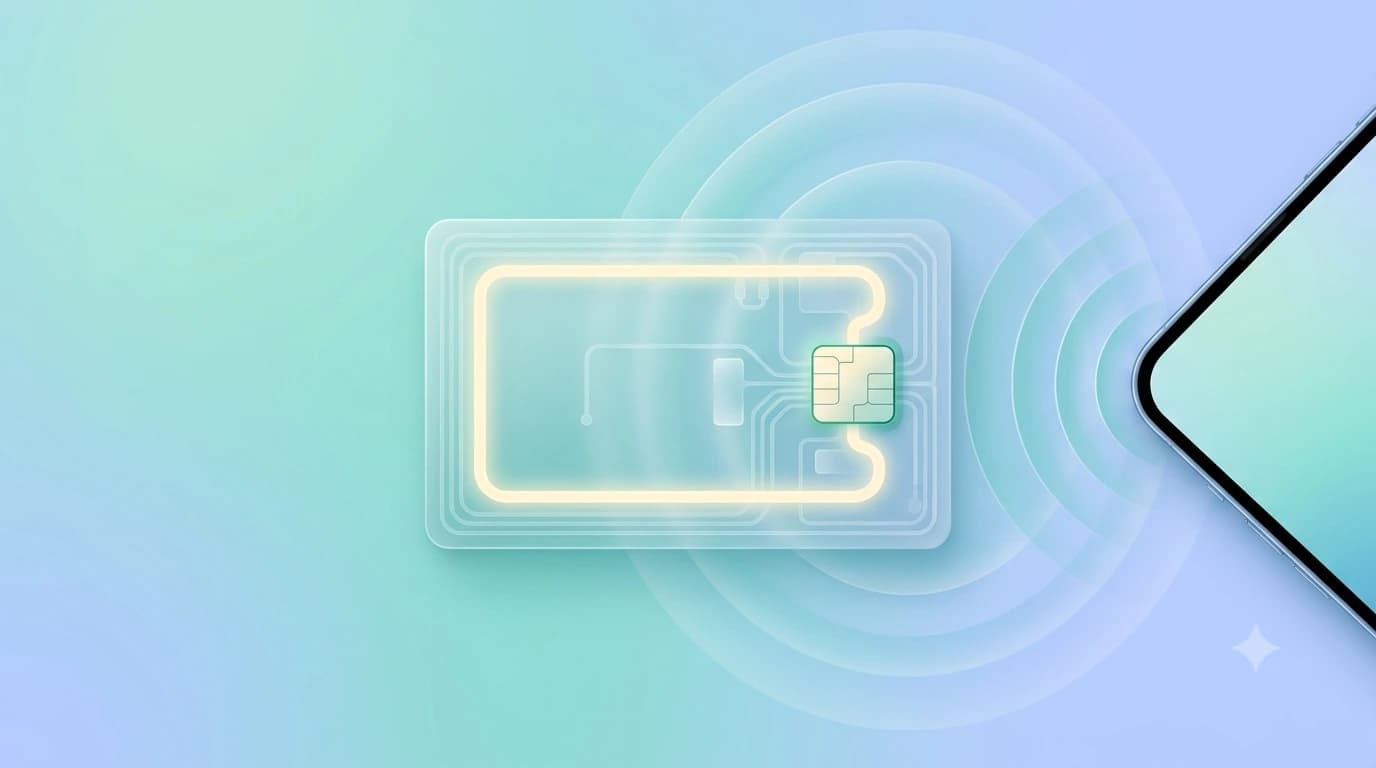

An NFC card is a plastic, metal or wooden card with a tiny chip and a thin antenna sealed inside it, built to the same footprint as a debit card — the standard NFC card size. Hold it against a phone and the phone reads what the chip holds — usually a link — and opens it. There is no battery, no charging and no pairing. The phone briefly powers the chip through the air, which is why an NFC card works for years and costs very little.
That is the short answer to what is an NFC card. In plain terms, NFC card means a card that hands a phone a link the moment the two touch. Below: the full form, how the chip actually works, what people use them for in India, and whether your phone can read one. If you are asking about the feature inside your handset rather than the card, what NFC means on a phone covers that side.
What NFC stands for
NFC stands for Near Field Communication. The NFC card full form spells out the whole idea: communication that only happens in a very near field — about four centimetres. That short range is a feature, not a limitation. Because the card has to be almost touching the phone, nothing can read it from across a room, which is what makes tapping safe in a crowd. The NFC full form explained in detail covers where the name comes from and what each word means.
Asked in Hinglish — nfc card kya hota hai — the answer does not change: ek card jisme chip hai, jo phone ke paas laane par link khol deta hai.
How does an NFC card actually work?
The phone generates a small magnetic field. When the card enters it, that field induces just enough current in the card's antenna to wake the chip, which then transmits its stored data back. The whole exchange takes a fraction of a second. Most how NFC card work explanations over-complicate this: there is no app negotiating a connection and no Bluetooth pairing, just a chip answering when it is powered.
What the chip stores is deliberately small — typically a few hundred bytes, enough for a URL. That is the important design choice: the card holds a pointer, and everything interesting lives at the other end of it, where it can be changed without touching the card.
What is an NFC card used for?
The common NFC card uses in India fall into four groups — and if you are looking for the visiting-card kind, the full NFC cards range covers PVC, metal and wooden finishes:
- Sharing contact details — tap the card on someone's phone and your profile opens, with a button to save your number. This is the NFC visiting card use case, and it is the biggest one.
- Access and identity — office door cards, hotel keys, metro cards. Same technology, different chip settings.
- Payments — the tap-to-pay symbol on your debit card is the same family of technology, though bank cards use a secured version with far stricter rules.
- Shop and review tools — a card or standee on a counter that opens a review page or a catalogue when tapped.
Do I need a special phone to use an NFC card?
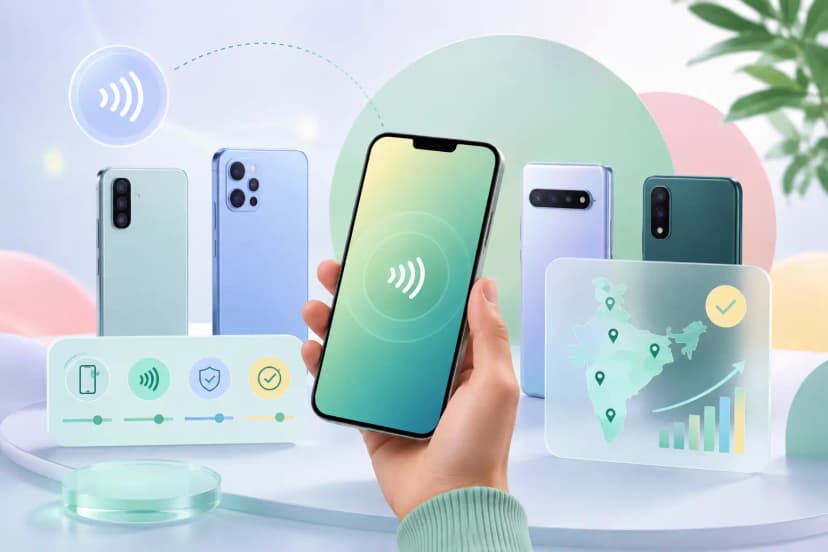
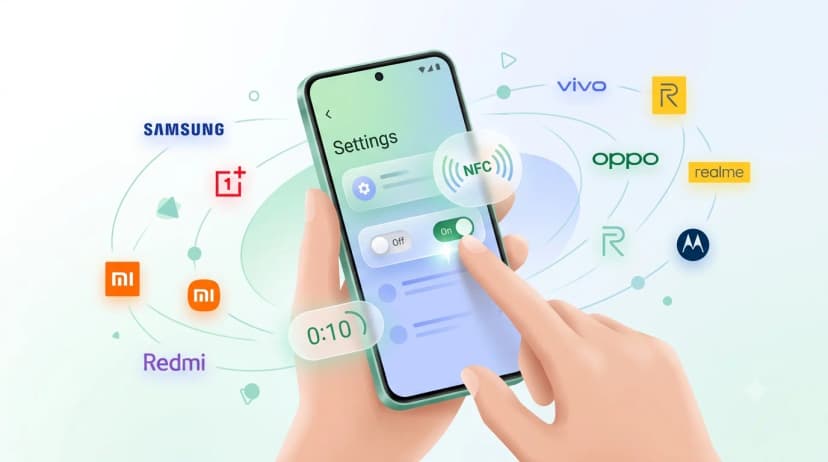
You need a phone with NFC hardware, which most mid-range and above handsets sold in India now have, but not the cheapest ones. Every recent iPhone reads NFC tags without any setup. On Android it may need switching on once — enabling NFC on Android takes about ten seconds in settings. To check whether a specific handset has it, see which phones have NFC in India.
This is the practical reason most NFC visiting cards also carry a printed QR code: the tap serves people with newer phones, the scan covers everyone else. Neither side has to install anything — which is why, in practice, NFC cards do work on all phones.
Is an NFC card the same as an RFID card?
Not quite — NFC is a subset of RFID. Both use radio waves to read a chip without contact, but RFID covers a huge range of frequencies and distances, including tags read from several metres away in warehouses. NFC is the short-range, high-frequency corner of that family, and it adds two-way communication so a phone can both read and write. In everyday terms: every NFC card is an RFID card, but most RFID tags are not NFC — the full RFID vs NFC comparison covers where each one is used.
What is NFC card in the sense your office uses the phrase? Quite possibly a plain RFID access card your phone cannot read at all — normal, and a frequency difference rather than a fault. If your phone shows "no supported app for this NFC tag", that message has its own explanation.
The NFC card details worth knowing before you buy
Chip type. Most visiting cards use an NTAG-series chip, which every modern phone reads. Cheaper stock sometimes uses chips with patchier iPhone support. The chip itself outlives the card body — how long an NFC card actually lasts explains what wears out first.
- Rewritable or locked. A rewritable card lets you change the destination later; a locked one is fixed forever. For a card with your name on it, rewritable is almost always the right choice.
Material. Metal looks premium but the metal itself interferes with the signal, so those cards need a shielded chip placement — a reason well-made metal cards cost more than PVC. Metal vs PVC, compared properly, weighs cost, durability and feel.
What happens if the link dies. If whoever hosts your profile disappears, a tap leads nowhere. The chip is fine; the destination is not. For everything else that can stop a tap registering, see what to check when an NFC card is not working.
Setting one up and handing it over
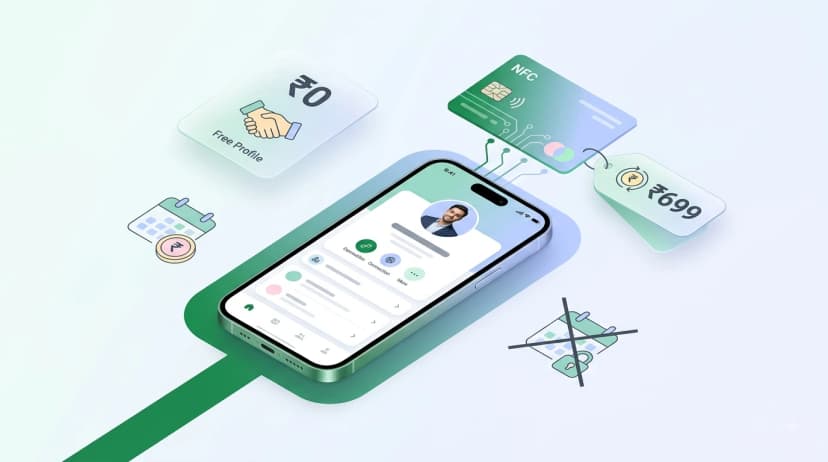
The question of how to use NFC business card hardware splits into two halves: setting it up once, and handing it over well every day. Setup is short. Create your profile, point the card at it (a ProfileTap card arrives already pointed), and test it on your own phone before anyone else's. Handover is where people fumble: hold the card flat against the back of the other person's phone, near the top edge on an iPhone and near the middle on most Android models, and wait a second for the banner rather than waving it about.
People who search "how to use nfc business card india" are usually asking about the WhatsApp step. After the tap, the profile page shows a Save Contact button and a WhatsApp button, and in India the second one gets pressed far more often than the first. Say "just tap WhatsApp" as you hand the card over and the conversation starts before you have let go of it.
Using NFC on your own phone
How can I use NFC on my phone, if you are the one tapping rather than the one being tapped? On Android, switch NFC on in Settings once and then hold the phone to a card or tag; on iPhone, just hold. Most confusion comes from expecting an app to open first. There is none. NFC use in mobile is passive: the phone listens for a tag whenever the screen is on, and only reacts when one is within a few centimetres.
How is NFC used beyond visiting cards? Tap-to-pay at card machines, metro gates, hotel room doors, and pairing a speaker by touching the phone to it. The everyday NFC uses in India still skew towards payments and transit, with sharing the fastest-growing one. NFC usage in mobile phones is therefore wider than most owners realise: the chip that opens a visiting card is the same one that opens a metro gate. Whichever job it is doing, NFC used in mobile handsets does one thing: power a chip for a moment and read a few bytes back.
Is it safe?
For a visiting card, yes — there is nothing sensitive on it. The chip holds a public link, the same link you would happily print on paper. The four-centimetre range means nobody can read it from a distance, and a card holding a URL cannot transmit your bank details because it does not have them. The genuine caution is the reverse direction: treat an unknown NFC tag the way you would treat an unknown QR code, and look at where the link goes before you act on it.
Once you have one, the setup and handover section above covers the practical side; the rest is habit.