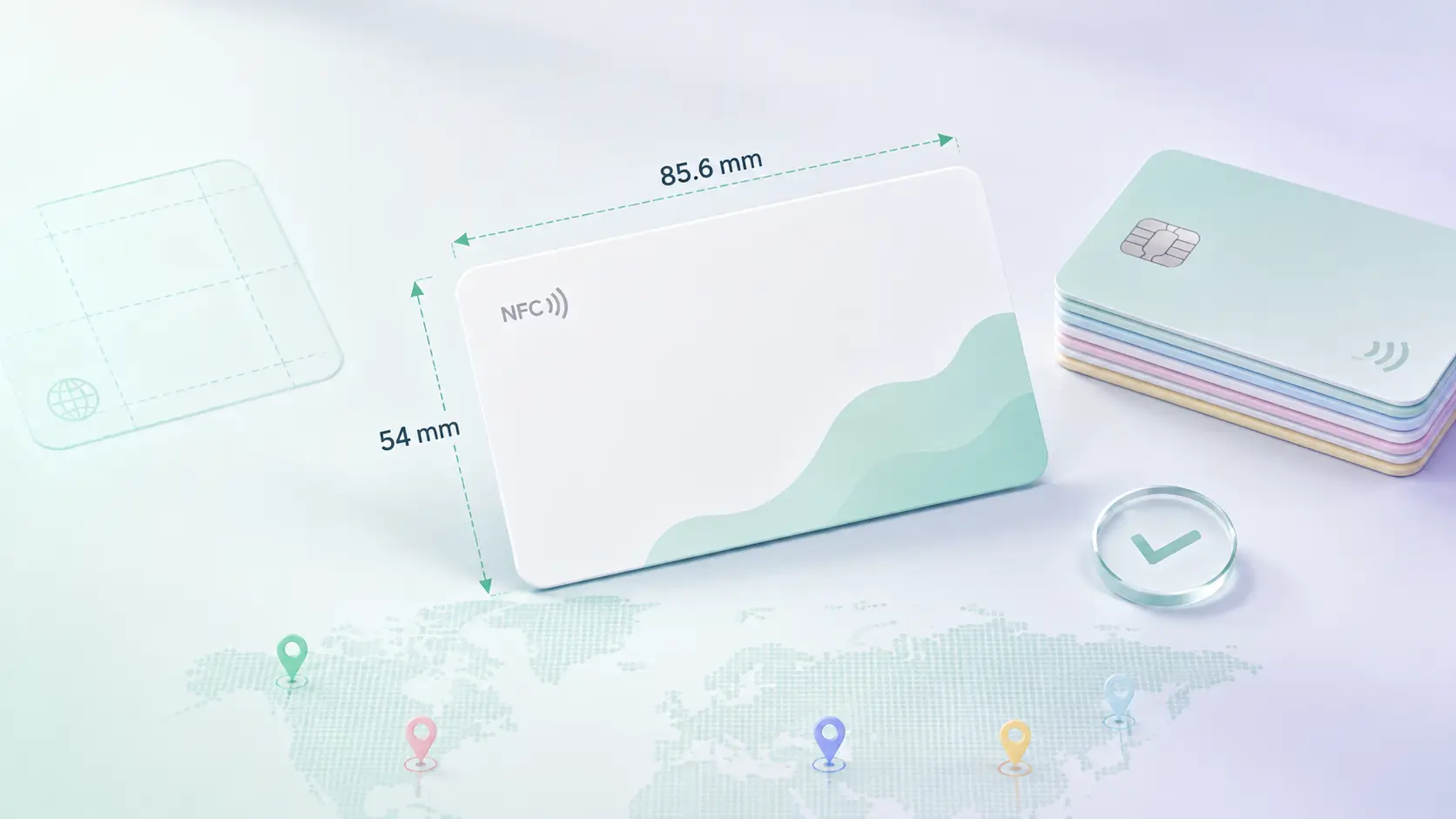

The standard NFC card size is 85.6 x 54 mm — the ISO 7810 ID-1 format, identical to a debit card. That single dimension replaces the whole regional chart printed cards have to follow, because an NFC card is a card first and a printed surface second.
It is worth knowing why that number is fixed, and what actually varies between one NFC card and another.
Those NFC card dimensions come from the ID-1 standard, and they do not shift with the material — metal, PVC and wood all land on the same rectangle.
Why ID-1 and not the paper card size
Printed visiting cards follow regional conventions — 89 x 51 mm in India and North America, 85 x 55 mm across most of Europe. NFC cards ignore that entirely and use the banking standard, because the card has to fit a wallet slot anywhere in the world and carry an antenna loop of a predictable size. The upside is that one card works in every market. The full printed-card chart is in our visiting card size guide.
Digital visiting card size is a slightly different question, and so is digital business card size. The physical card stays 85.6 x 54 mm; the profile it opens is a web page, which has no fixed size at all.
What varies: thickness, not footprint
- PVC sits around 0.8 mm — the same feel as a bank card, and the most wallet-friendly.
- Wood is thicker and lighter than it looks, with visible grain that varies card to card.
- Metal is thicker again and noticeably heavier, which is most of its effect when handed over.
Where the antenna sits
The antenna is a loop running around the perimeter of the card, not a chip in the centre. That is why punching a lanyard hole through a card can kill it, and why a sharp fold across the edge is more damaging than a scratch in the middle. It also means the whole card is the tap area — you do not need to aim at a particular spot on the card, only at the right spot on the phone.
If you are designing artwork for one
Design to 85.6 x 54 mm with a 2–3 mm safe margin, and keep critical text away from the edges — card cutting drifts just as printing does. At 300 DPI that is roughly 1011 x 638 pixels at trim. There is far less to fit than on a paper card, which is the point: the details live on the profile the card opens, not on its surface. Compare materials and finishes before you commit to one.