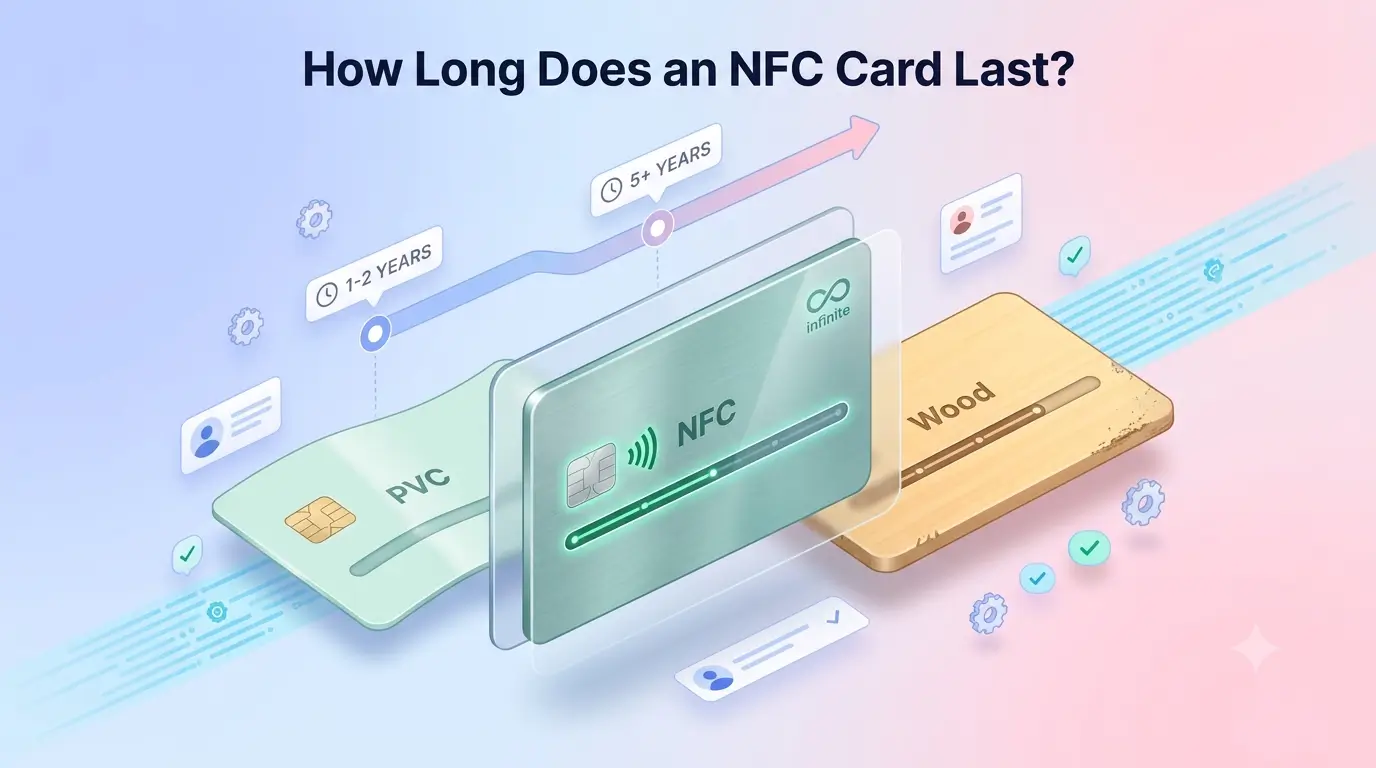

An NFC chip has no battery and no moving parts, so it does not expire on a timer — what wears out is the card body around it. In normal wallet use a PVC card lasts several years, and metal effectively outlives the details printed on it. The usual reason a card gets replaced is a change of job, not a failure.
How long does NFC card last India, where cards live in back pockets through a humid summer? The same answer holds: until the body around the chip gives out, not on any timer.
That is a strange thing to say about a piece of technology, so it is worth explaining what is actually inside.
Why there is nothing to run down
The chip is passive. It has no power source of its own — the reading phone briefly powers it through the antenna, and the rest of the time it is inert. There is no battery to degrade, no firmware to expire and no subscription inside the card. Chip manufacturers typically rate the memory for a very large number of reads and a shelf life measured in decades, which is far beyond the life of the plastic around it.
What actually ends a card's life
- A sharp fold across the antenna loop, which runs around the card's perimeter rather than through the middle.
- A punched hole for a lanyard, if it cuts that loop.
- Sustained heat — a car dashboard through an Indian summer is genuinely hard on PVC.
- Surface wear on the print, long before the chip is affected. The card still works; it just looks tired.
By material
PVC behaves like a bank card — waterproof, flexible, and fine for years unless it is creased. Wood is more sensitive to prolonged damp but does not crease. Metal is effectively permanent in normal use.
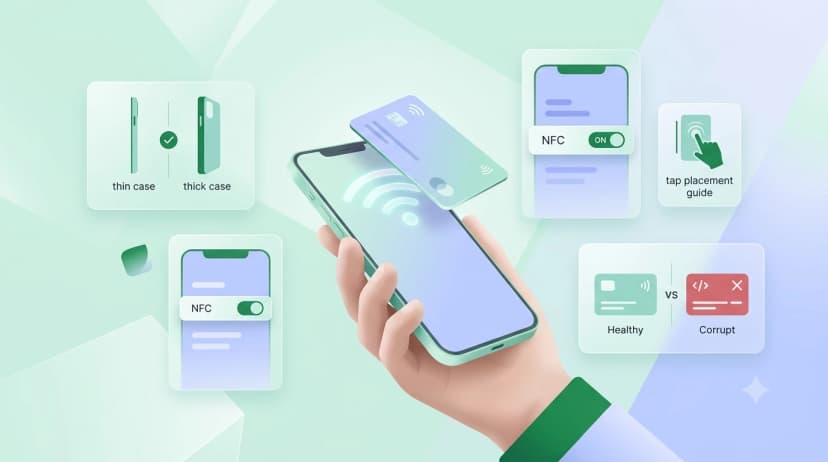
The part that genuinely does not age is the content. Because the chip stores a link rather than your details, a card printed today still opens current information in three years — you edit the profile, not the card. If a card does stop responding, work through the troubleshooting checklist before assuming it has died; genuine chip failure is rare.