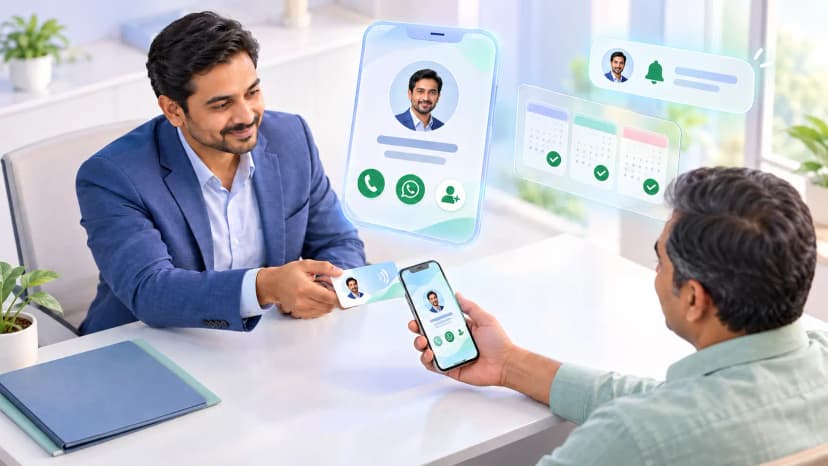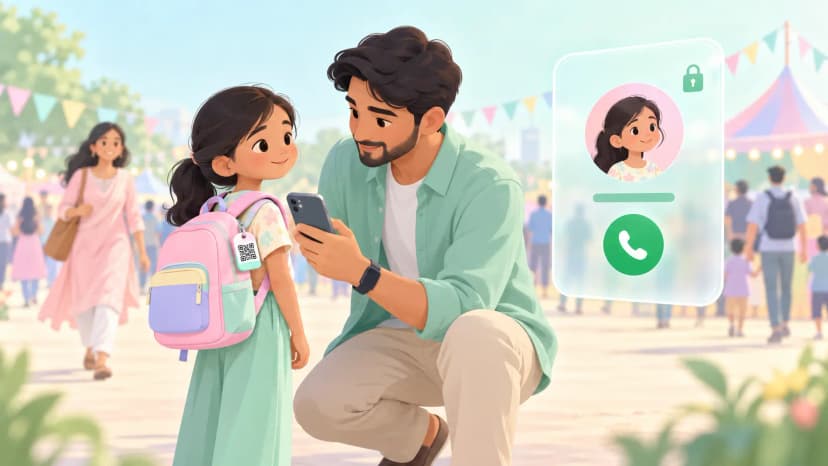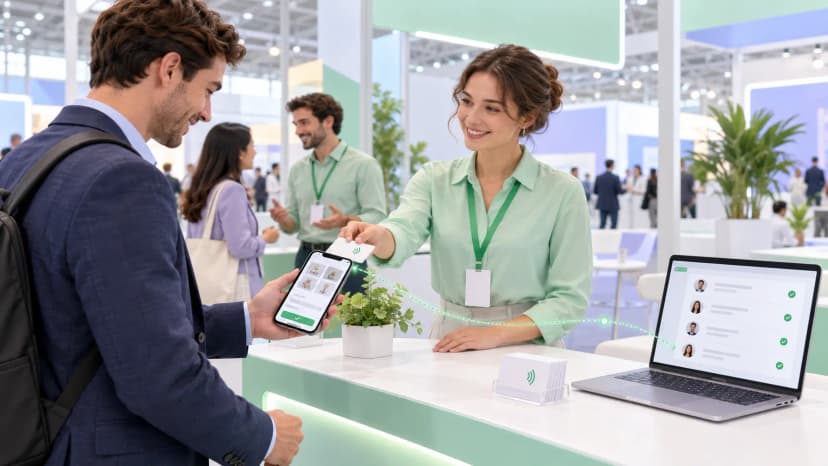

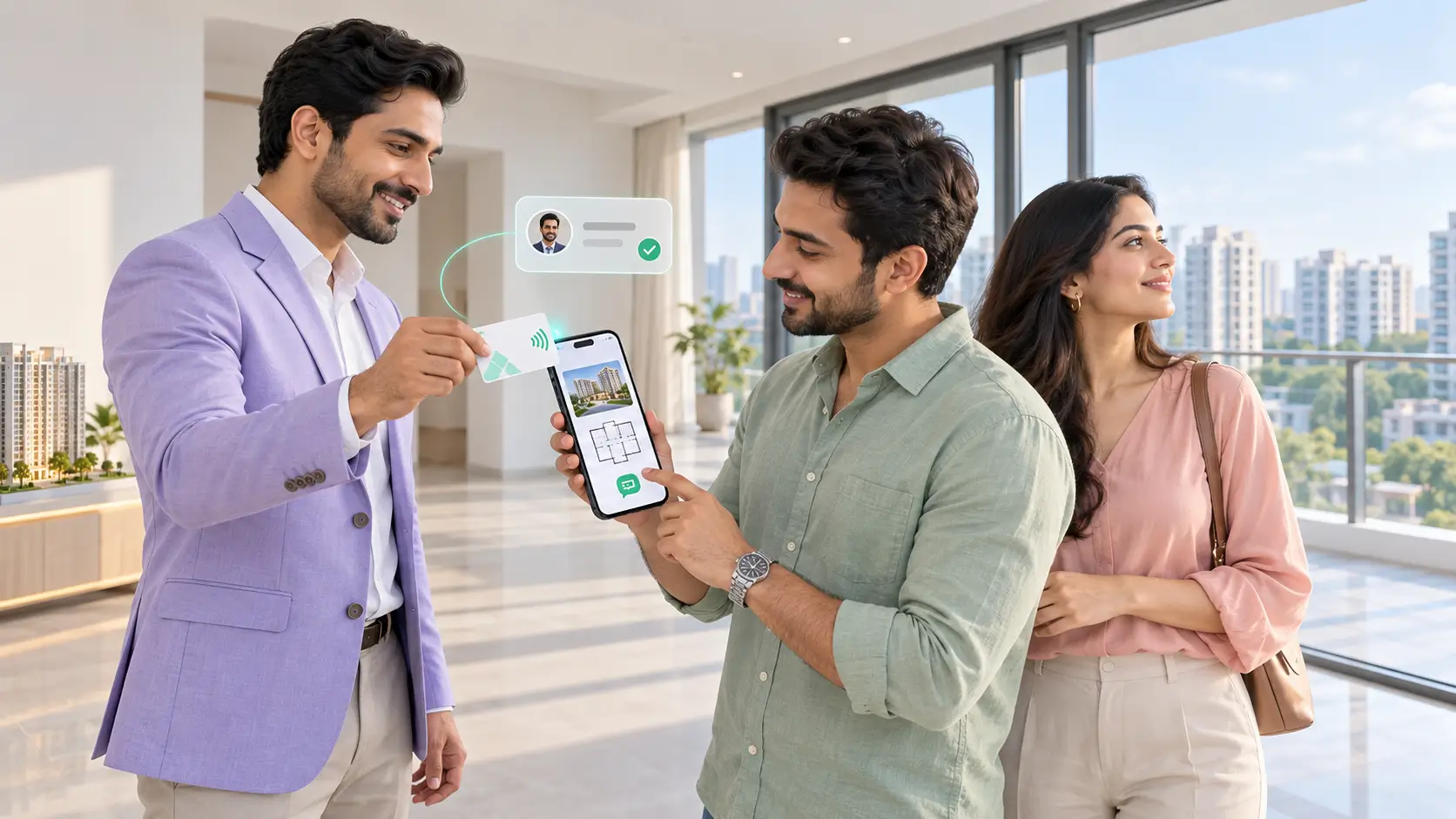
This is how real estate agents use digital visiting cards on a working day: one tap at the site hands the buyer your number, the project brochure and the location pin, and the same tap brings the buyer's number back to you. When a new project launches you edit the card from your phone, and you can see who reopened the brochure before you pick up the phone to call.
Who this is for
You sell or rent property, on your own or with an agency, and most of your week happens at sites: walking a couple through a 2BHK sample flat, showing a plot to an investor, waiting at a society gate for a family running twenty minutes late. Buyers often see more than one agent before deciding, and the one they call back is usually the one whose details they can find again.
You already send most things on WhatsApp. What you lack is one page that carries your contact details, the projects you are selling now and a way for the buyer to leave their number, handed over in the few seconds before they get back in the car.
The problem
What a month of paper costs
- Representative scenario: 12 site visits a week is 48 a month. At ₹35 a printed brochure, that is ₹1,680 a month, and plenty of brochures stay behind on a car seat.
- If one buyer in four calls you back, 36 of those 48 visits leave you with no number to follow up.
- A new project or a changed phone number means reprinting the whole box of cards.
- Floor plans and price sheets go out on WhatsApp that evening, by which time the buyer may be standing in another agent's sample flat.
The brochure stays in the car
A printed brochure is heavy, dates the moment prices move, and seldom makes it from the car seat into the buyer's home. The buyer remembers the flat and forgets which agent showed it to them.
A paper card only travels one way
The buyer leaves with your number. You leave with their first name and a guess at their budget, and whether you ever speak again is up to them.
Every new project means new cards
Agents move between projects and builders through the year. A card printed for last season's launch either names the wrong project or names none at all.
The fix
What changes from the first visit
- One profile carries your number, WhatsApp, the current project brochure, floor plans and a location pin.
- You tap an NFC card on the buyer's phone to share it, or they scan the QR on the back.
- The buyer can send their own name and number back in the same step.
- When a project changes you edit the profile from your phone, and every card already handed out opens the new version.
Tap
At the sample flat, you tap the card on the buyer's phone and your profile opens in their browser without anything to install. If their phone has NFC switched off, the QR printed on the card does the same job.
Capture
Knowing how to collect buyer details at a site visit used to mean a register at the site office. Now the buyer taps Save contact to keep your details, then Exchange to send their own name and number back, so the visit ends with each of you holding the other's contact.
Follow up
Real estate site visit follow up works best while the flat is still fresh in the buyer's mind. Their details are already saved in your ProfileTap dashboard, so the floor plan and price sheet can go out on WhatsApp before they reach the main road.
Old way vs new way
Digital visiting card at the site
- Brochure, floor plans and location behind one tap
- Buyer details shared back during the visit
- One edit updates every card already handed out
- Follow-up sent before the buyer leaves the area
Paper card and printed brochure
- A brochure per visit, reprinted whenever prices change
- The buyer's number only if they call you
- New cards for every new project or number
- Floor plans sent hours later from the office
What you get
Project documents behind one tap
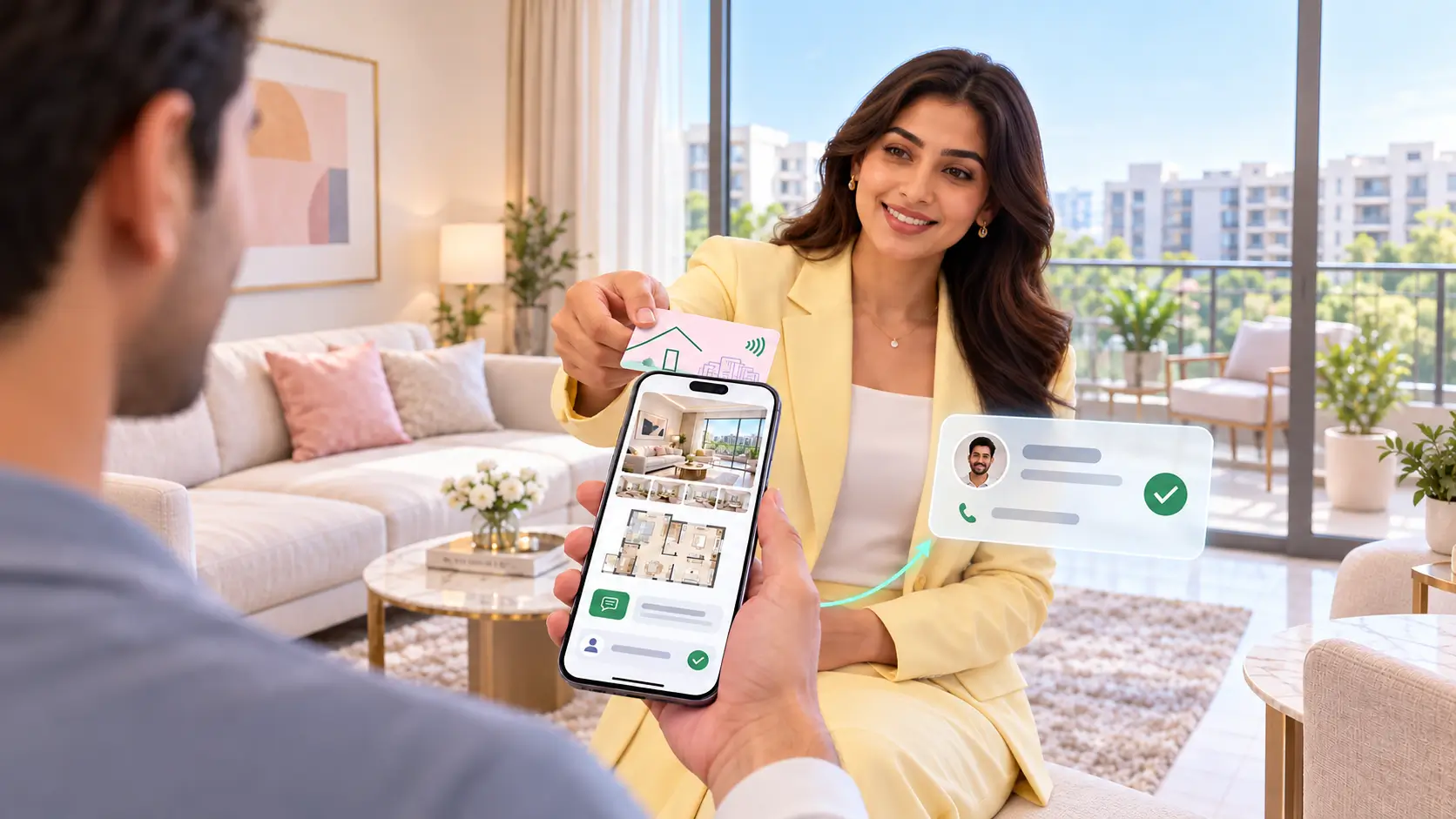
Link the brochure PDF, floor plans, a walkthrough video and the site location on your profile, and you can share property details with buyers without carrying a single sheet of paper. Swap them out when you move to the next project.
A contact exchange that works both ways
The buyer chooses to share their name and number from your profile, and those details are saved for you. A polite handshake at the gate becomes a lead you can actually call.
A card that keeps up with your projects
Change the featured project, your number or your agency name from your phone, and the NFC card and QR keep working as they are. A ProfileTap NFC card comes with seven years of Pro, so the card in a buyer's drawer still opens your current listings next year.
Views that show who is still interested
Analytics show when a buyer opens your profile again or taps the brochure link. A family that rechecks the floor plan two days after the visit moves to the top of your call list.
Results
| Measure | Before | After |
|---|---|---|
| Buyer numbers collected in a month of 48 visits | About 12, from buyers who call back | Up to 48, shared at the visit |
| Printed brochures per month | 48 | None, sent as a link |
| Brochure spend per month | ₹1,680 | ₹0 |
| When a project or number changes | A new print run of cards | One edit on the profile |
| When floor plans reach the buyer | That evening | Before they leave the site |
Representative scenario, worked through: 12 site visits a week makes 48 a month. Printing one brochure per visit at ₹35 each comes to ₹1,680 a month. If one buyer in four calls back, the paper route leaves you with 12 numbers. With two-way exchange, every buyer who agrees to share counts, so the ceiling is all 48. These are illustrative figures, not results from a ProfileTap customer.
The headline: each site visit ends with the buyer's details saved on your side and your brochure on their phone, and the card never needs a reprint.
What to watch for
Three things to know first
- Some buyers and older brokers still expect a printed card. Keep a few in the car for them.
- Two-way exchange depends on the buyer choosing to share. Ask them at the end of the visit.
- If your state requires your RERA registration number on marketing material, put it on the profile as well.
Summary
Background and goals. An agent running a dozen site visits a week wanted buyers to leave with the right project documents and wanted to leave with every buyer's number, without reprinting cards each time a project changed.
Solution. A digital visiting card on an NFC card with a QR fallback, carrying the brochure, floor plans, location and WhatsApp, with two-way contact exchange and analytics behind it.
Results. In the representative month above, brochure printing falls from ₹1,680 to nothing, buyer contacts can rise from about 12 to as many as 48, and follow-up leaves from the site gate instead of the office.
Try it at your next site visit
Set up your real estate agent card with this week's project, tap it at your next sample flat, and count how many buyers share their number back by Sunday.