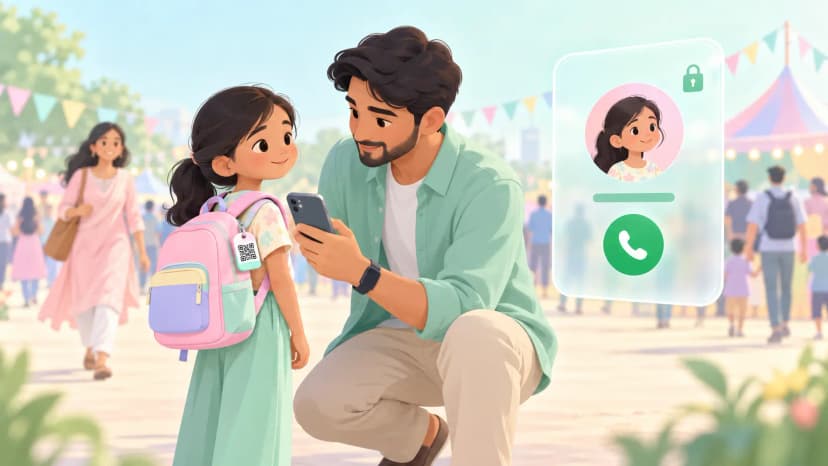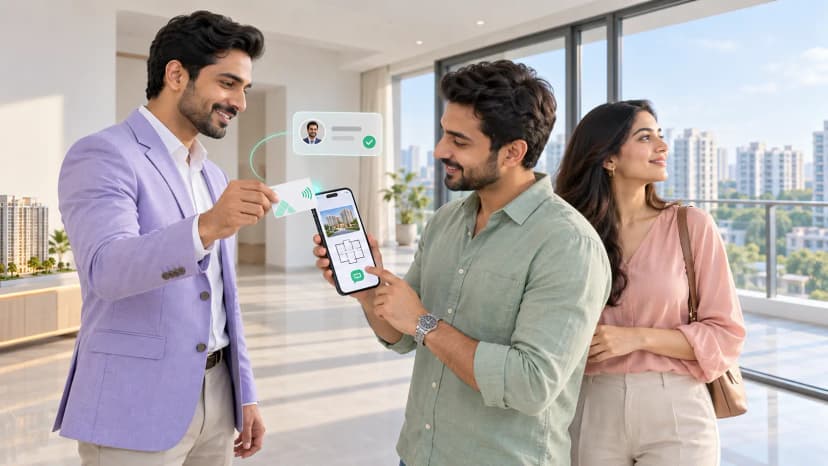

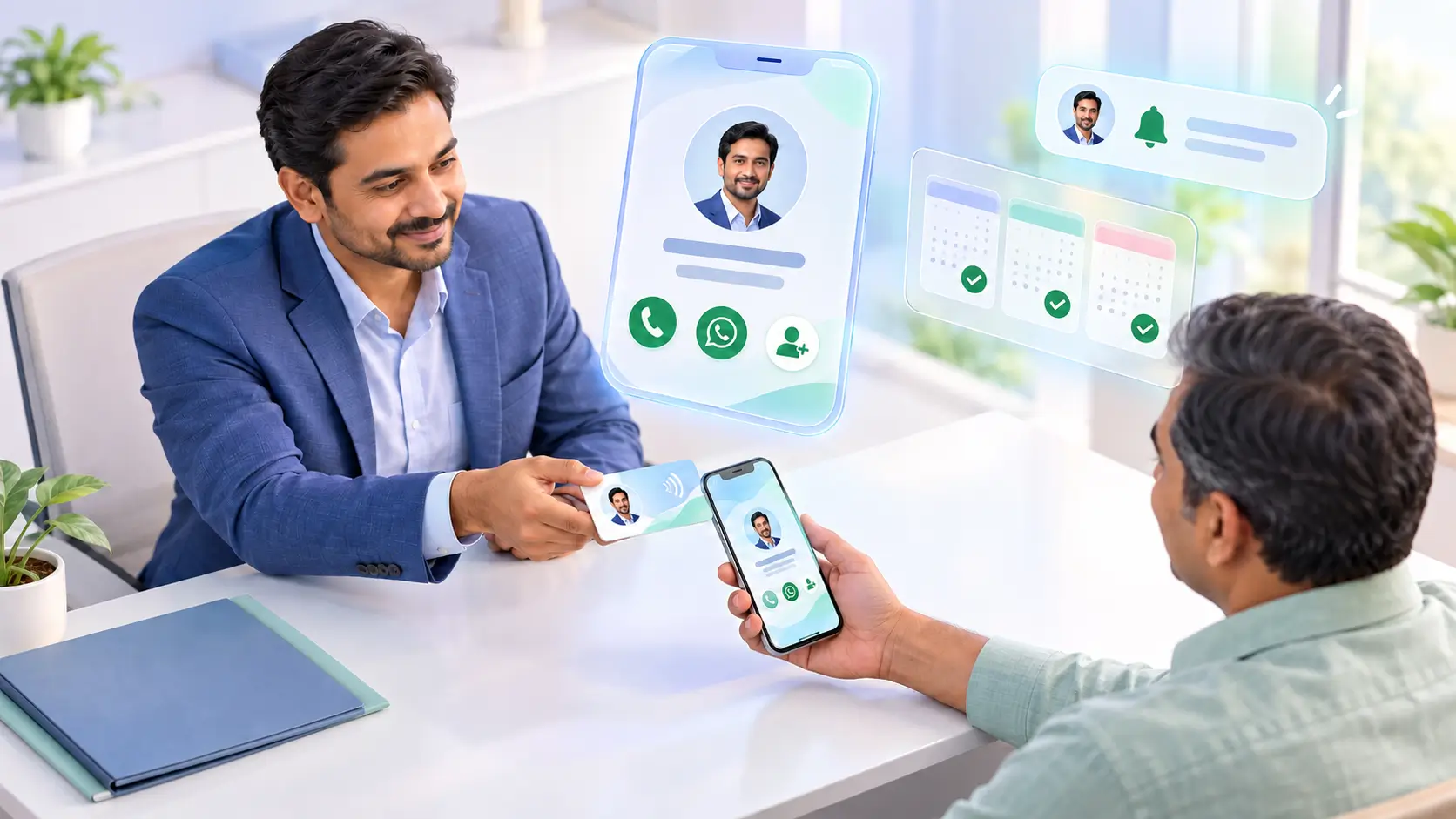
This is how LIC agents use digital visiting cards through a renewal season: one link carries your name, agent code, phone, WhatsApp and branch, the policyholder taps or scans it once and saves your number under your real name, and when a premium falls due the reminder arrives from a contact they already recognise. Change your number or move branches and every card you handed out last year opens the new details.
Who this is for
You service a few hundred life insurance policies and most of your contact with policyholders happens around due dates. A good share of premiums fall in the same months, which means a quarter of your book can come up for renewal in a few weeks, and each one needs a reminder, a confirmation and sometimes a visit.
The reminder only works if the policyholder still has your number and knows it is you. After a few years, a change of handset or a phone saved as a first name only, that is less certain than it sounds.
The problem
What one renewal quarter costs
- Representative scenario: 300 policies with a quarter of them due in the same three months is 75 renewals to chase.
- If one policyholder in five no longer has your number saved, 15 of those reminders land as a message from an unknown number and are easy to ignore.
- A late premium means a grace-period call, a revival form, and a policyholder who now thinks of you as the person who chases money.
- A branch transfer or a new handset means a fresh box of printed cards, and the old ones are still in wallets across your area.
Your number is saved under the wrong name, or not at all
A policyholder who met you four years ago may have you saved as a first name, a nickname, or nothing. When your reminder arrives it looks like any other message, and a policyholder who cannot place the sender puts off replying.
A printed card lasts about one premium cycle
The card you gave at policy signing was in a drawer by the second premium. It carries a branch you may have left and a landline nobody answers, and reprinting it every time something changes costs money and never reaches the people who already hold the old one.
Reminders go out one chat at a time
Each reminder is typed out with the policy number, the amount and your number again, because you are not sure the policyholder still has it. Seventy-five of those in a month is an evening job, and the replies come back to whichever number they happen to have.
The fix
What changes before the next due date
- One profile carries your name, photo, agent code, phone, WhatsApp, branch and the hours you take calls.
- At a home visit you tap an NFC card on the policyholder's phone, or they scan the QR on the back, and the profile opens with nothing to install.
- They tap Save contact and your number goes into their phone under your full name and agency.
- When your number or branch changes, you edit the profile once and every card already in a wallet opens the new version.
Tap
At the policyholder's home or at the branch counter, you tap the card on their phone and your profile opens in the browser. A policyholder with an older phone scans the QR printed on the card and sees the same page.
Capture
LIC agent client follow up only works when both sides hold the right number. The policyholder taps Save contact to keep yours, and Exchange to send their own name and number back, so a new policyholder is in your dashboard before you leave the house.
Follow up
LIC policy renewal follow up becomes a short WhatsApp message from a saved contact: the policy number, the amount, the date, and your profile link in case they want to call. Agents often ask how to remind policyholders about premium due date without sounding like a collection call, and the honest answer is that a reminder from a name they recognise reads as service, and the same words from an unknown number read as pressure.
Old way vs new way
Digital visiting card for renewal season
- Saved under your full name and agency in one tap
- One edit updates every card already handed out
- Reminders go out from a contact they recognise
- New policyholder details shared back at the visit
Printed card and typed reminders
- Number saved as a first name, if at all
- A reprint every time the branch or handset changes
- Each reminder typed out with your number again
- Replies arrive on whichever number the client kept
What you get
Agent code and WhatsApp behind one tap
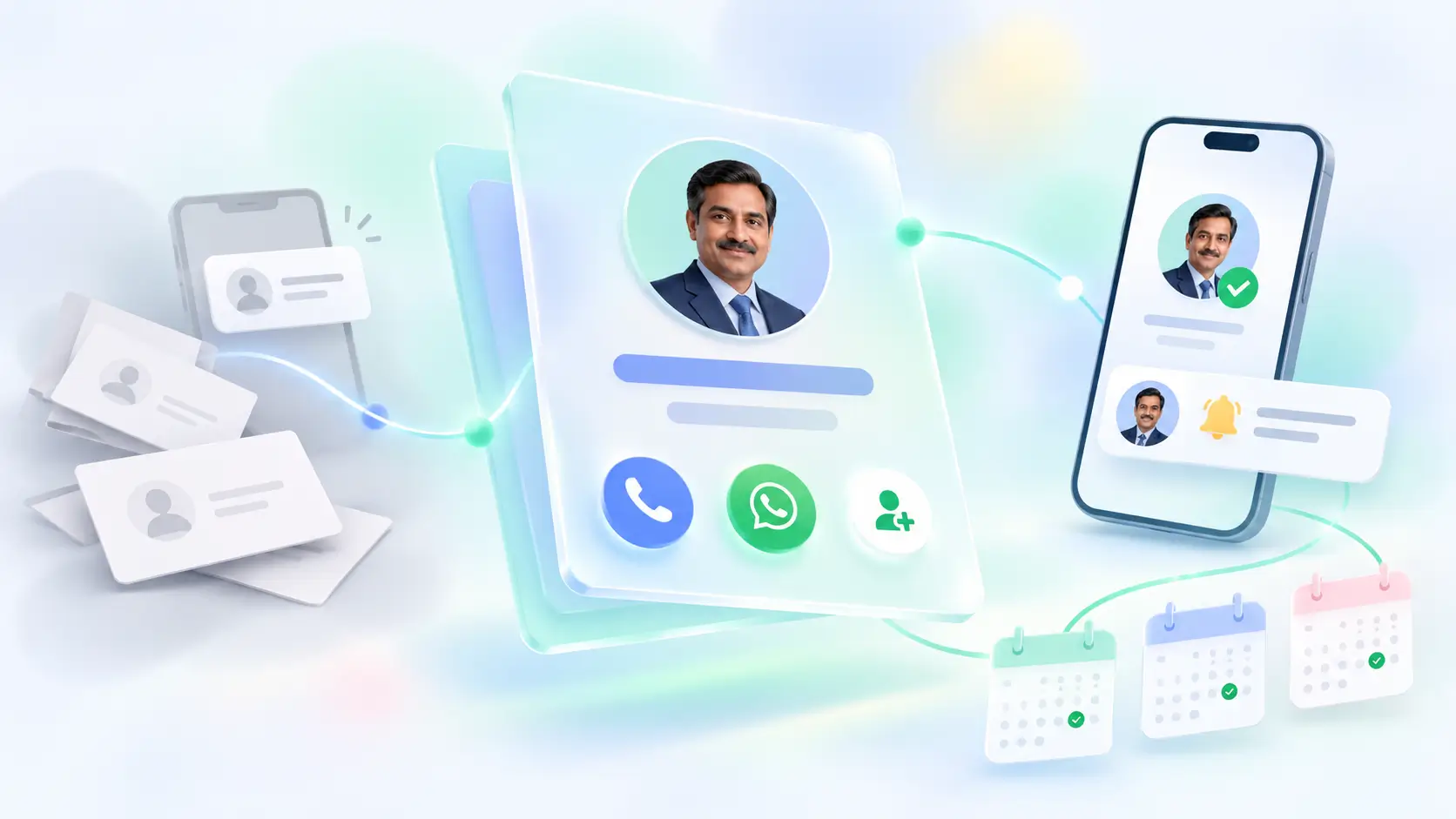
Put your agent code, branch, phone, WhatsApp and the hours you take calls on one profile. A policyholder who wants to pay, query a bonus or add a nominee finds everything on the page you handed them, and a WhatsApp tap starts the chat with your number already in it.
A number saved under your real name
Save contact writes your full name, agency and number into the policyholder's phone exactly as you set them. The next time your reminder lands it shows who it is from, which is most of the battle.
A card that outlasts a branch transfer
Move branches, change your handset or add an office number, and you edit the profile from your phone while the card in the policyholder's wallet keeps working. A ProfileTap NFC card includes seven years of Pro, so a card handed over at signing is still current when the policy matures.
Views that tell you who opened the reminder
Analytics show when a policyholder opens your profile or taps the call button. Someone who opened it twice the week a premium is due but has not paid is the person to call first.
Results
| Measure | Before | After |
|---|---|---|
| Reminders that reach a saved contact, out of 75 due | About 60, with 15 arriving from an unknown number | Up to 75, from a name they saved themselves |
| Printed cards in a year | A new box after each change | None, the profile is edited instead |
| When your number or branch changes | Old cards keep showing old details | Every card opens the new details |
| New policyholder details on your side | Written in a diary at the visit | Saved to your dashboard through Exchange |
| Typing per reminder | Policy, amount, date and your number | Policy, amount and date |
Working through the representative scenario: 300 policies with a quarter due in one season is 75 renewals. If one policyholder in five has lost your number, 15 reminders arrive from a stranger and 60 from a known contact. Once each policyholder has saved your profile with Save contact, all 75 can arrive from a name they recognise. The figures are an illustration and do not come from a ProfileTap customer.
In one line: every reminder in the season goes out from a contact the policyholder saved themselves, and nothing gets reprinted when your details change.
What to watch for
Before you hand out the first card
- Keep the profile to what LIC and the regulator allow on agent marketing material. Contact details, agent code and branch are fine; promised returns are not.
- Exchange depends on the policyholder choosing to share. Ask at the end of the visit, when they have just saved your number.
- Some older policyholders will still want something printed. Keep a few cards in the bag for them and make the tap your default.
Summary
Background and goals. An agent with a few hundred policies wanted every renewal reminder to reach a policyholder who knew who was writing, without reprinting cards each time a number or branch changed.
Solution. A digital visiting card on an NFC card with a QR fallback, carrying agent code, branch, phone and WhatsApp, saved to the policyholder's phone with Save contact and returned through Exchange.
Results. In the representative season above, reminders from a recognised contact rise from about 60 to all 75, card reprints stop, and new policyholder details land in the dashboard at the visit.
Try it before the next due date
Set up your LIC agent card with your agent code and WhatsApp, hand it to the next ten policyholders you visit, and see how many of them save it on the spot.