How to build a personal brand online comes down to three things: a clear niche, consistent output, and one profile that ties it all together. You do not need a huge following; you need to be easy to recognise and easy to reach. Whether you are a food creator in Mumbai, a freelance designer in Bangalore or a finance educator on YouTube, your personal brand is what people remember once they stop scrolling. This guide walks through six steps you can start today, and the points where creators in India usually lose momentum.
TL;DR
- Write one line: I help [audience] do [thing] through [content type]. Everything else hangs off it.
- Go deep on one platform; repurpose to the rest.
- Weekly for a year beats perfect for three months.
- Point every bio, signature and offline tap at one hub, and watch which content sends brands to it.
Before you start
Your personal brand is the impression people form when they see your content, your profile or your name. It is not your logo or your follower count; it is the answer to one question: what does this person do, and why should I pay attention? In India that answer increasingly decides who gets paid. Brands running influencer campaigns check whether your niche is clear, your content is consistent and your profile looks professional before they look at reach. A sharp brand answers before anyone has to ask, and a focused creator also gets better algorithmic reach, survives platform changes, and is found when brands search by niche rather than by name.
What you need: the three pillars
- Niche: the specific corner you own. "Lifestyle" is too broad; "sustainable fashion for Indian women under 30" is a niche.
- Voice: how you communicate, and it should feel the same in a caption and a video.
- Visual identity: consistent colours, fonts and thumbnail treatment, so people recognise your content before they read your name.
Step 1: Define your niche in one sentence
Answer three questions honestly: what do I know better than most people, who benefits most from that knowledge, and what is already out there that I am different from? Then write one line: I help [audience] do [thing] through [content type]. That sentence is the foundation of everything else, and the narrower it is, the more memorable you become.
Step 2: Build one unified profile
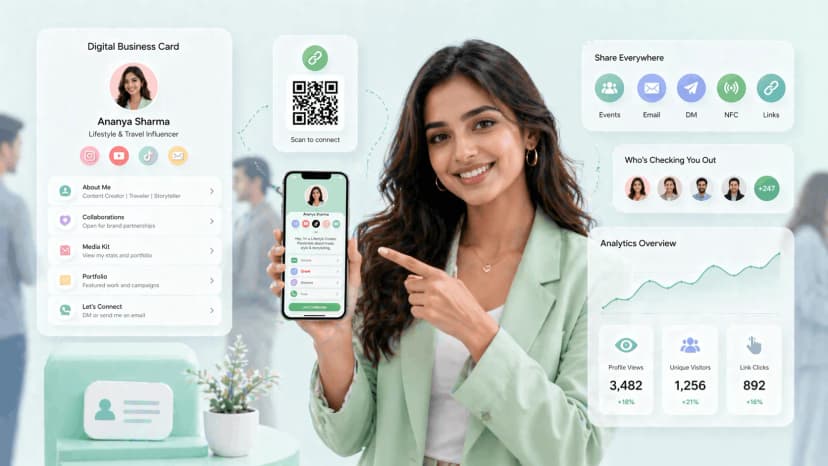
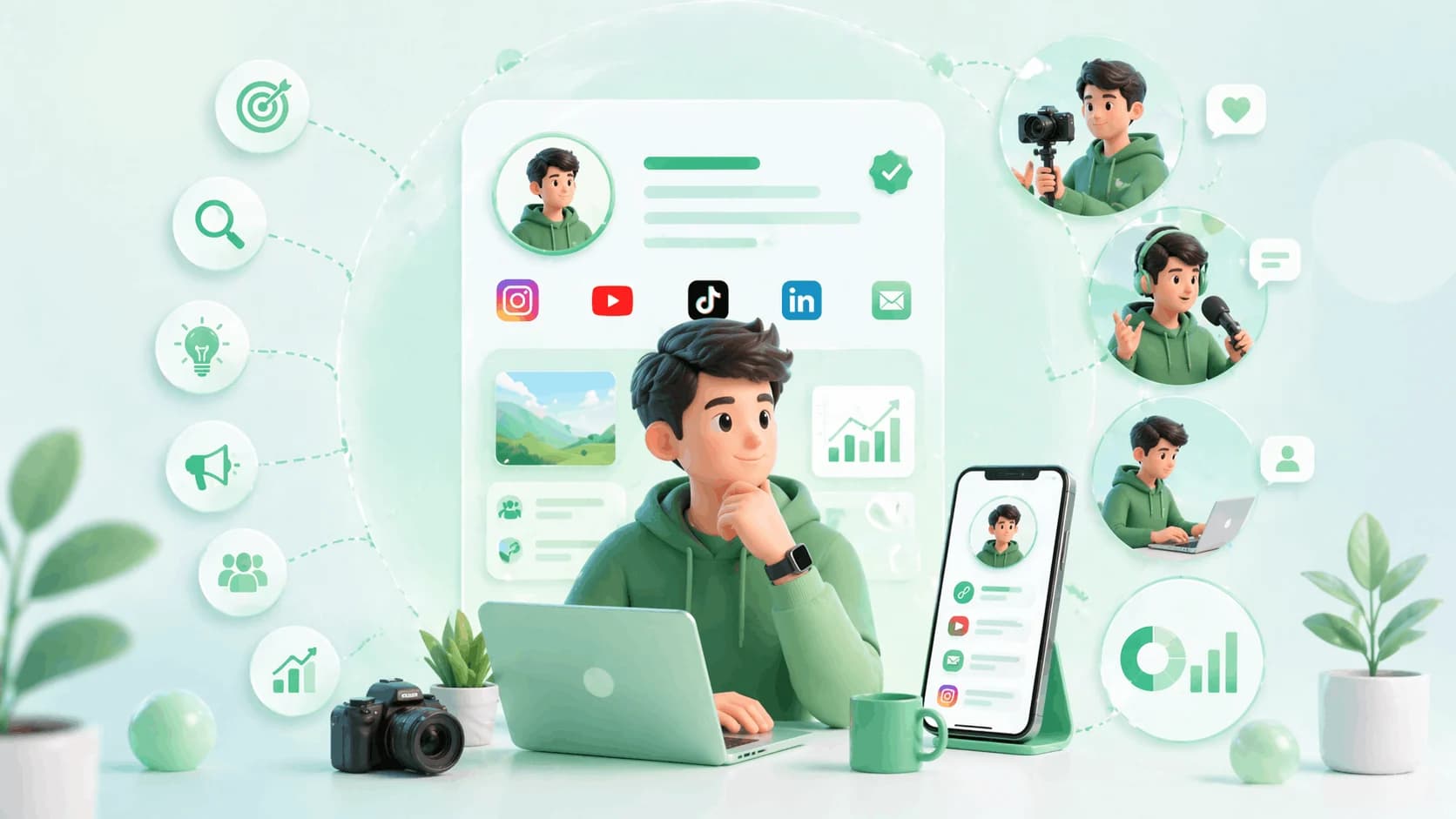
Before you make more content, connect what you have already made. Most creators have an Instagram page, a YouTube channel, an X account, maybe a LinkedIn and a portfolio link, all sitting in silos; a brand manager who lands on your Instagram has no easy way to reach your YouTube, and a journalist has to dig for your email. A creator identity profile gives you one link that holds your platforms, handles, booking contact and media kit, shareable by QR code or an NFC tap. This becomes your hub.
Step 3: Choose a primary platform
Be present on several platforms, but build deeply on one first. Your primary platform is where you create original, in-depth content; everything else repurposes it. Match it to how you naturally communicate.
| How you communicate | Primary platform | Repurpose to |
|---|---|---|
| Teaching, tutorials, deep dives | YouTube | Shorts, carousels, LinkedIn posts |
| Visual lifestyle, fashion, food | Reels, YouTube Shorts, Pinterest | |
| Opinion and rapid commentary | X | LinkedIn, newsletter |
| Professional and B2B positioning | X threads, long-form on YouTube | |
| Short-form entertainment | Reels or Shorts | Cross-post to the other, clip highlights to X |
Step 4: Set a cadence you can keep
Early on, consistency beats brilliance. Someone who posts every week for a year beats someone who posts perfectly for three months and disappears. A cadence that lasts: one primary-platform post a week as your core content, three or four repurposed pieces a week such as clips, carousels and quotes, and one short engagement block a day for comments, replies and DMs. Batch-create and schedule with a tool like Buffer, Later or Notion, but none of it works unless you protect the time.
Step 5: Point everything to one hub
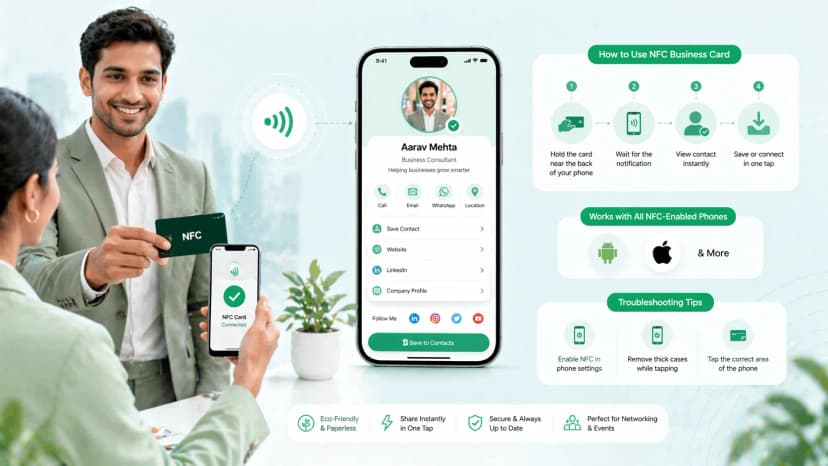
As you grow, your profiles scatter. The fix is one central link that lists your active platforms, links your media kit, carries your booking contact, states your niche, and updates in real time, so you change it once and it updates everywhere. ProfileTap's creator identity hub does exactly this: one smart profile with a shareable link and QR code you use in your Instagram bio, email signature, YouTube description and WhatsApp status, or tap from a social media NFC card at an offline event. A brand manager sees everything they need in one place.
Step 6: Track what is actually working
Building without data is guesswork. A personal brand strategy that holds up is one you can measure: which content drives profile visits, which platforms send the most traffic, when your audience engages, and which brands are clicking through. Then double down on what converts and cut what does not.
The step people get wrong
Skipping Step 2 and making more content first. Picture it from the outside: a brand manager searches your name, finds your Instagram, hunts for your contact, clicks an outdated link-in-bio, finally finds your email, and by then has moved on to a creator with a cleaner profile. That is a deal lost to friction, not to talent.
Why the hub matters more in India
Much of the outreach happens on WhatsApp, much of the discovery happens at offline meetups in Mumbai, Bangalore, Delhi and Hyderabad, and many audiences are multi-language. One link that opens instantly, shares on WhatsApp and taps offline removes each of those hurdles. The best creators treat their profile as a product: always current, always professional. That is the practical core of personal branding for creators, and it is what makes the difference when two creators with similar numbers pitch the same brand.
One profile hub
- One link in every bio, signature and status; change it once
- Media kit, booking contact and every platform in one place
- QR or NFC tap works at a meetup with no app on either side
- Visit and click data in one dashboard instead of five
Scattered profiles
- Each platform shows only part of you, so brands see the wrong half
- Contact details drift out of date one bio at a time
- Offline meetings end with a handle scribbled on a napkin
- No single place to see which content actually sends people to you
Common mistakes
Where creators lose momentum
- A generic bio with no niche. "Content creator | Lifestyle | Travel" says nothing; "Mumbai food creator | street food reviews" says everything.
- Inconsistent handles across platforms. Lock down one handle everywhere.
- No tracking. If you do not know what drives profile visits or enquiries, you are building blind.
- Treating every platform the same. Reels are not LinkedIn; adapt the format, keep the voice and niche.
- Ignoring offline. Creator meetups and brand activations run across Indian metros every month; without a QR code or NFC card to share your profile, you leave real connections on the table.
You're done
To build personal brand online presence that lasts, give it a professional home: one place that represents everything you do and makes it easy for brands, collaborators and followers to find you. The creator identity page is where to set that up, and the professionals profile covers the same idea for consultants and freelancers. For the bio itself, see best Instagram bio ideas for creators and best link in bio tools in India.