
Restaurant reviews come from asking at the right moment, not from asking more often. The moment is narrow: after the meal, before the bill is settled, while the customer is still seated and content. Ask then and a good share will do it. Ask on the way out and almost nobody will.
Everything else — placement, wording, format — is about making that one moment as frictionless as possible.
Put it in the bill folder
The bill folder is the highest-intent surface in the restaurant. The customer is seated, unhurried, phone already in hand, and in the one minute of the visit where they are actively thinking about how the meal went. A card there outperforms the same card at the entrance many times over.
Ask out loud as well
A card on its own is a prompt; a card plus a sentence from the server is a request. 'If you enjoyed it, a review really helps us' takes three seconds and lifts response noticeably. Brief the floor staff on when to say it — with the bill, not with the food — and keep it to one line.
Remove the typing
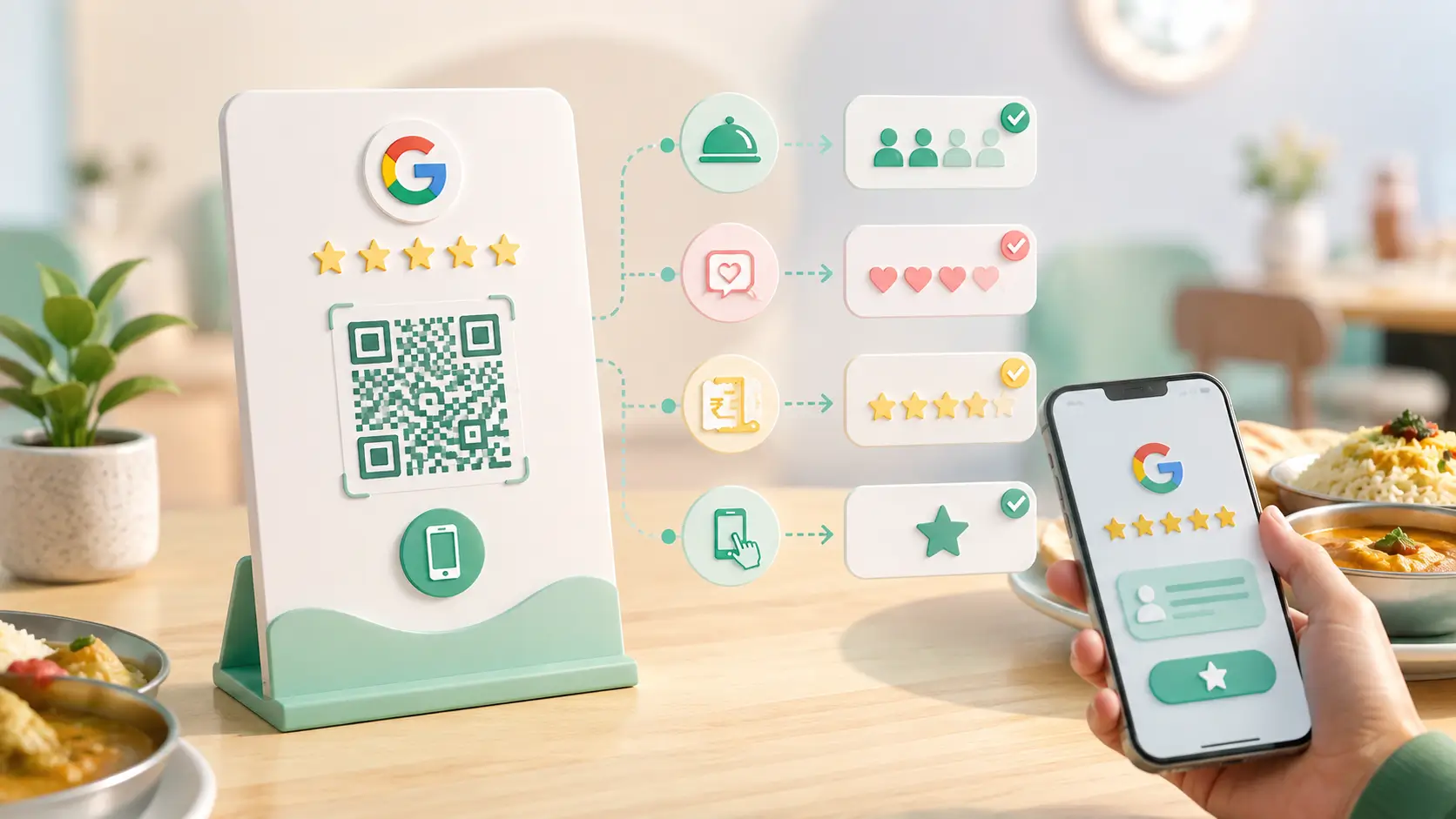
Every step you remove increases completion. A customer who has to search your restaurant name, pick the right listing among three, then find the review button will usually give up. A review link that opens the form directly turns a two-minute chore into a ten-second one. That single change matters more than any wording.
What not to do
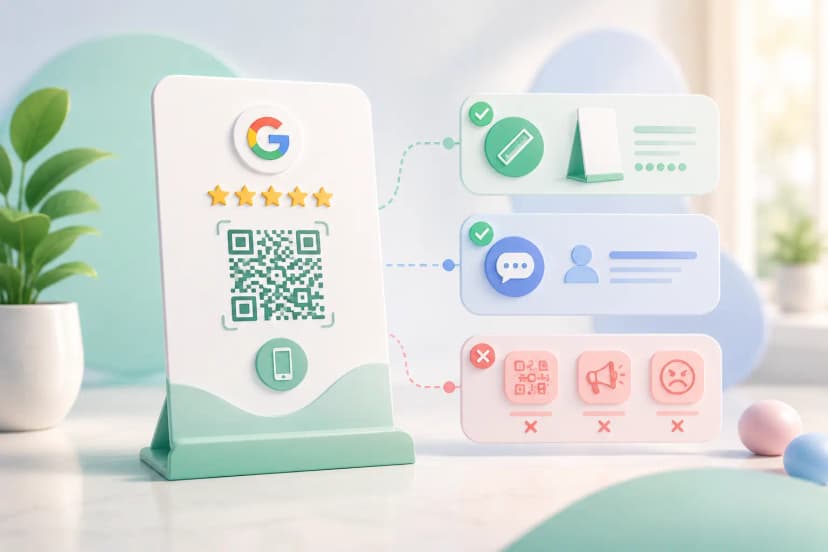
- Do not offer a discount or a free item for a review. Google prohibits incentivised reviews and listings do get penalised for it.
- Do not filter — asking only the customers who look happy is against the rules and reads as dishonest when it surfaces.
- Do not ask twice in one visit. One prompt lands; two annoy.
Reviews also arrive when things go wrong, and replying to those well matters as much as collecting good ones — covered in responding to negative reviews. For the physical side, a review card or standee is what puts the ask on the table. Groups running several outlets usually order review cards in bulk so every branch makes the same ask the same way.