
Restaurant reviews come from asking at the right moment, not from asking more often. The moment is narrow: after the meal, before the bill is settled, while the customer is still seated and content. Ask then and a good share will do it. Ask on the way out and almost nobody will. Everything else, placement, wording, format, is about making that one moment as frictionless as possible, and this guide sets it up in five steps a floor team can run from tonight.
TL;DR
- Ask with the bill, never at the door.
- A card in the bill folder plus one line from the server is a request; a card alone is only a prompt.
- The QR must open the review form directly. Any searching and most customers give up.
- No discounts for reviews, no picking the happy tables, no asking twice.
Before you start
Decide who owns this. In most restaurants the ask fails not because nobody agrees with it but because nobody is responsible for it after the first week. Name the floor manager or the cashier, give them the one line and the one card, and check the count on Monday. Anyone searching for how to increase Google reviews for restaurant India is usually missing this step, not the next five.
What you need
- A direct Google review link for the right listing; if you have two outlets, one per outlet.
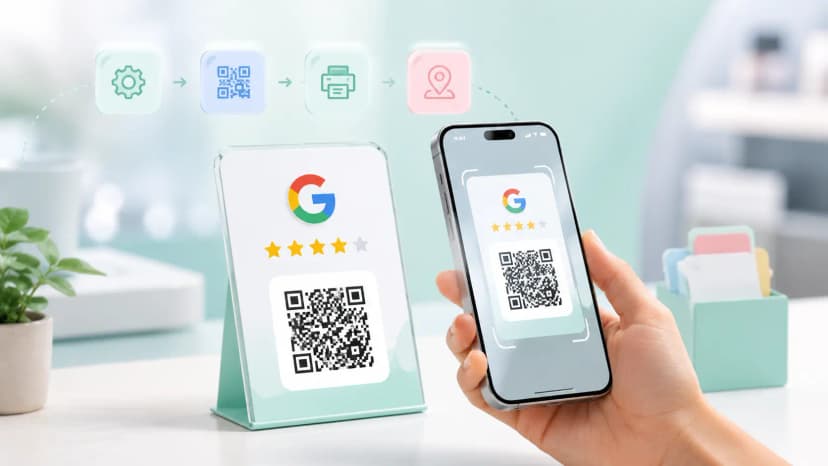
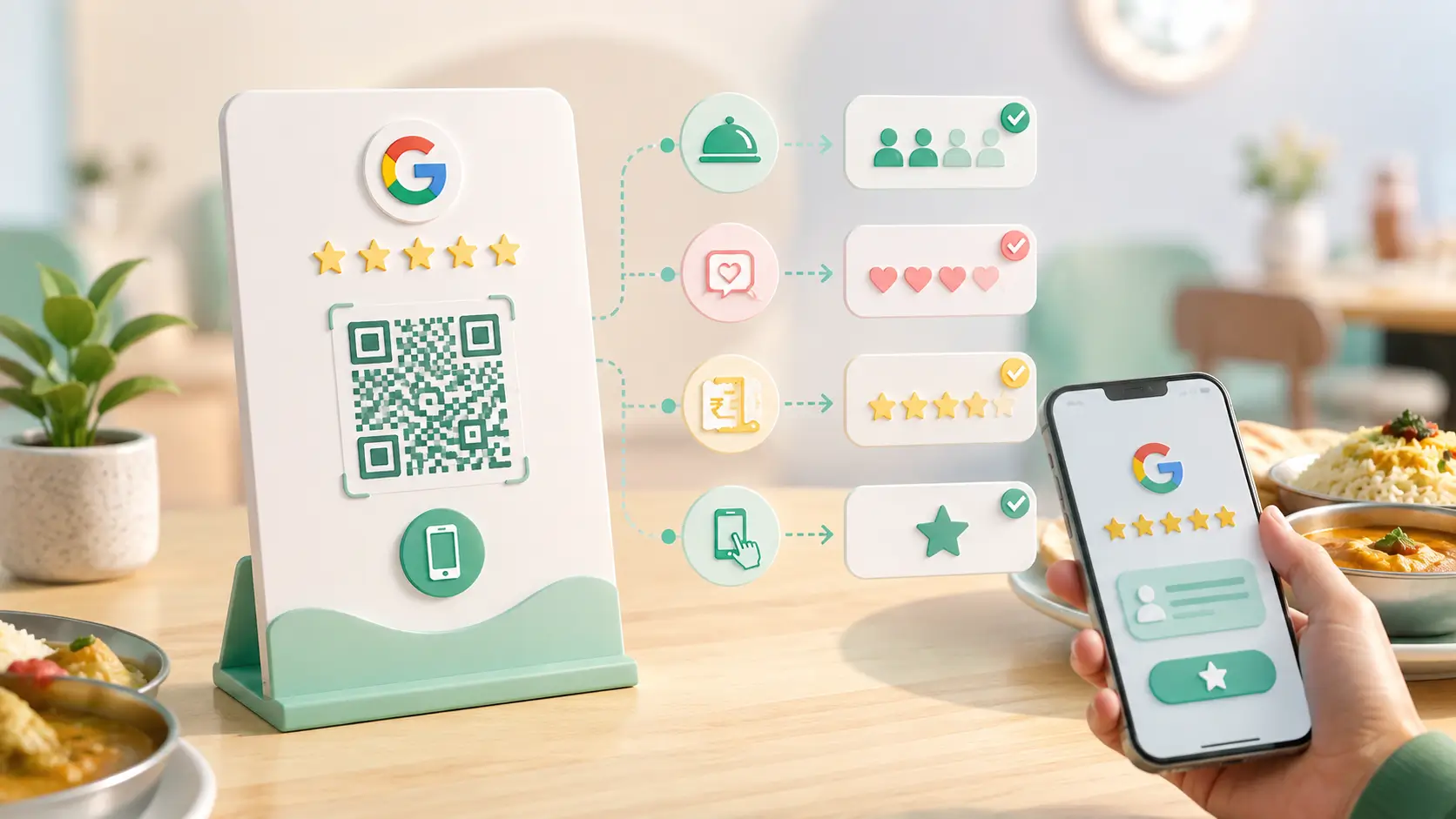
- A printed card or small standee carrying that link as a QR code.
- Bill folders or a counter where the bill is settled.
- Five minutes with the floor staff before the next service.
Step 1: Remove the typing
Every step you remove increases completion. A customer who has to search your restaurant name, pick the right listing among three, then find the review button will usually give up. A review link that opens the form directly turns a two-minute chore into a ten-second one. That single change matters more than any wording, so do it first and test it on a staff phone before printing anything.
Step 2: Put it in the bill folder
The bill folder is the highest-intent surface in the restaurant. The customer is seated, unhurried, phone already in hand, and in the one minute of the visit where they are actively thinking about how the meal went. A card there outperforms the same card at the entrance many times over. If you settle at a counter instead, a small standee next to the card machine does the same job.
Step 3: Ask out loud as well
A card on its own is a prompt; a card plus a sentence from the server is a request. "If you enjoyed it, a review really helps us" takes three seconds and lifts response noticeably. Brief the floor staff on when to say it, with the bill, not with the food, and keep it to one line.
The step people get wrong
Saying the line at the wrong moment. With the starters it is an interruption; at the door it is a chore the customer has already mentally left. Said once, with the bill, it is simply a polite request at the point where the customer is deciding what they thought of you.
Step 4: Ask every table the same way
The card goes in every folder and the line is said to every table, not only the ones that looked happy. Filtering is against Google's rules, reads as dishonest when it surfaces, and hides the complaints you most need to hear. One prompt per visit; two annoy.
Step 5: Count and reply
Note the review count on the listing every Monday. If it is flat after two weeks, the problem is usually the link (test it again) or the line (listen for whether it is actually being said). Reply to every review within a day or two; reviews also arrive when things go wrong, and replying to those well matters as much as collecting good ones, which is covered in responding to negative reviews.
Where the ask lands, by placement
| Where you ask | Customer's state | How it performs |
|---|---|---|
| Bill folder, with one line from the server | Seated, content, phone in hand | Best; this is the moment |
| Standee at the billing counter | Standing, waiting for change | Good for counter-service formats |
| Sticker on the table or menu | Hungry, deciding what to order | Weak; nothing to review yet |
| Poster at the entrance or exit | Arriving or leaving | Weakest; nobody stops |
| WhatsApp message that evening | At home, distracted | Useful as a second chance, not the main ask |
Honest comparison
Where the bill-folder ask is the right tool
- Dine-in restaurants, cafes and bars where the bill comes to the table
- Outlets with a stable floor team who can be briefed once
- Groups running several branches that want every outlet asking the same way
- Any place where the current review count is low and the rating reflects only the complainers
Where the bill-folder ask does not fit
- Quick-service and takeaway formats where nobody sits; use a counter standee or a QR on the receipt instead
- Cloud kitchens with no front of house; the ask has to ride on the packaging or the delivery message
- Very high-volume canteens where servers cannot add a line per table; let the card do the work alone
Common mistakes
Three things not to do
- Do not offer a discount or a free item for a review. Google prohibits incentivised reviews and listings do get penalised for it.
- Do not filter. Asking only the customers who look happy is against the rules and reads as dishonest when it surfaces.
- Do not ask twice in one visit. One prompt lands; two annoy.
You're done
That is the whole routine: a direct link, a card in the bill folder, one line from the server, every table, counted weekly. For the physical side, a review card or standee is what puts the ask on the table. Groups running several outlets usually order review cards in bulk so every branch makes the same ask the same way, and the wider routine for any business is in how to get more Google reviews.