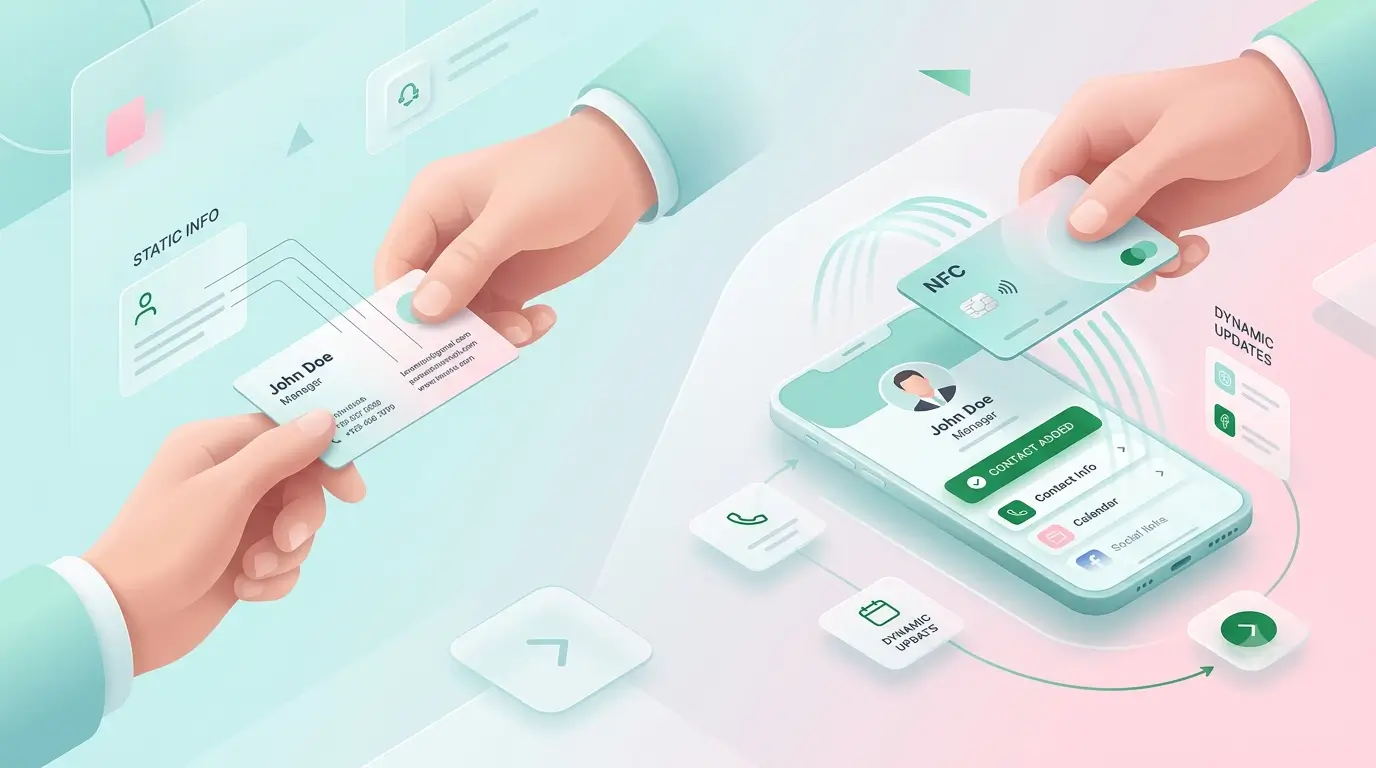

The honest answer to NFC card vs visiting card is that they do different jobs. A printed visiting card is fixed the moment it leaves the press; an NFC card holds a link, so the details it opens can change while the card in someone's wallet stays the same. Which one is better depends entirely on how often your details change.
Most comparisons on this topic are written to sell one side. Here is the version that admits what each is genuinely good at.
So, NFC card vs visiting card which is better India for a working professional? It is a trade rather than a winner, and plenty of people end up carrying both.
Where a printed card still wins
It costs very little per card, so you can hand out hundreds without thinking. It needs no phone, no battery and no signal on either side. It can be pinned to a noticeboard, left on a counter or stapled to an invoice. And a well-made card at 400 GSM still communicates care in a way a tap does not. For a shop that hands out fifty cards a week to walk-in customers, print is not the wrong answer.
Where it stops working
The day something changes. A new number, a second branch, a change of role — and every remaining card is quietly wrong, including the ones already in other people's drawers. There is no way to know how many people acted on the old details.
What the NFC card changes
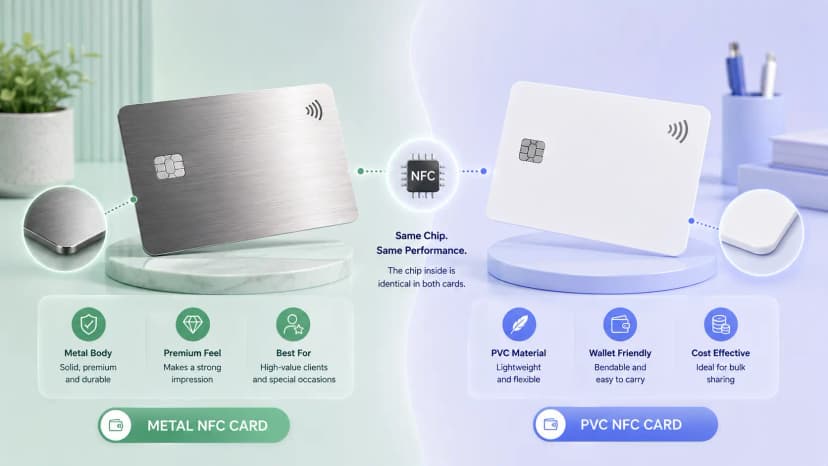
Because the chip stores a link rather than the details, editing your profile updates every card ever handed out. It also lifts the limit on what you can show — a printed card fits a name and a number; a profile holds your portfolio, services, location and a Save Contact button. The trade-off is a dependency: the link has to keep working, so the provider matters. Materials and prices are on the NFC card range.
The answer most people land on
Both, with a QR printed on the paper card that opens the same profile the NFC card does. The printed card handles volume and the noticeboard; the smart card handles the meeting that matters; and the profile behind both stays current. If you are not ready to buy anything, build the profile free and put its QR on your next print run.