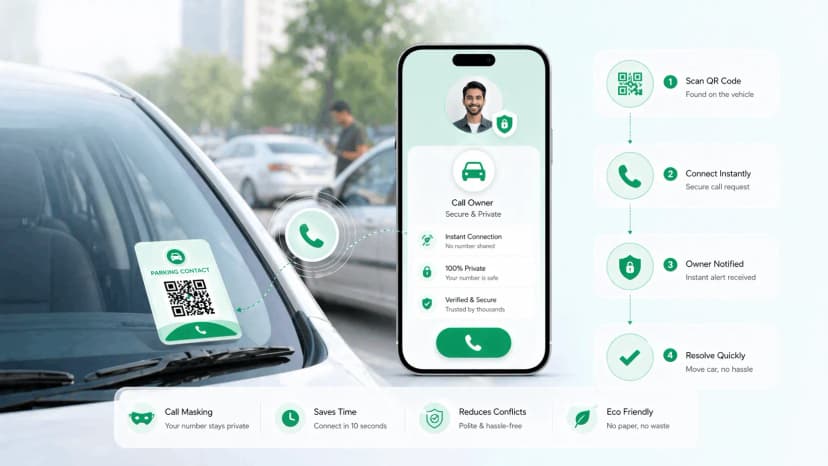
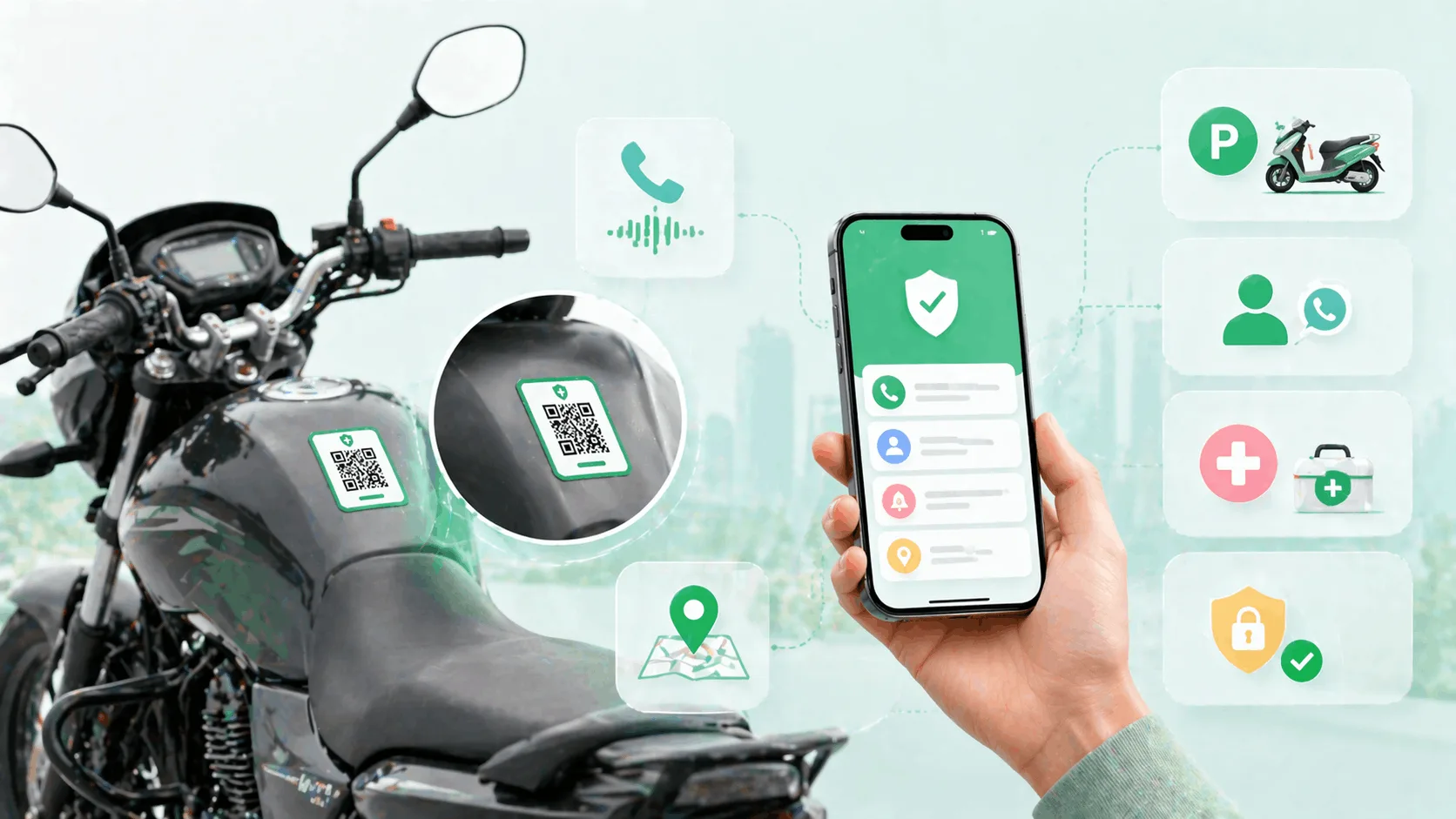

India has over 200 million registered two-wheelers. Bikes and scooters get parked in stairwells, on footpaths, in building corridors, blocking car exits, and in every creative tight space that a car simply couldn't fit. When a bike blocks another vehicle or pedestrian access, there's usually no owner in sight and no way to find them.
A vehicle QR code sticker on your bike changes that. The person who needs you to move scans the code, taps to call, and you're there in two minutes. No intercom announcement. No security guard relay. No 20-minute standoff. Even a photo of the sticker works later — a QR code can be scanned straight from an image.
A bike qr code tag india riders can actually use is simple: a qr code tag for bike parking and emergencies. Whether you ride a commuter motorcycle or a scooter, a two wheeler qr sticker — or a dedicated scooter qr tag — puts your contact one scan away.
Why Bike Owners in India Need a QR Tag
Two-wheelers face a specific set of challenges that make QR tags more useful for them than for most car owners:
Wrong parking is even more frequent. A car has defined parking spaces - even in chaotic Indian parking, there's a general understanding that cars go in certain areas. Bikes get parked anywhere. On footpaths in Mumbai. In the corridors of office buildings in Gurgaon. At the entrance of shops in Connaught Place. In the bike bays of housing societies in Bangalore, where 15 bikes are crammed into a space meant for 8. The bike is almost always in someone's way.
The owner is harder to trace. In a housing society, if a car is blocking the gate, the security guard can often check the vehicle register to find the flat number. Bikes are frequently not registered in building systems. There's no number plate database available to the public, and even if there were, it requires effort. A QR tag on the bike is the fastest, most direct path to the owner.
Theft is a real concern. India has a significant two-wheeler theft problem. A QR profile that identifies the owner - and is linked to a ProfileTap account with verified contact details - provides a layer of ownership evidence that can support recovery efforts.
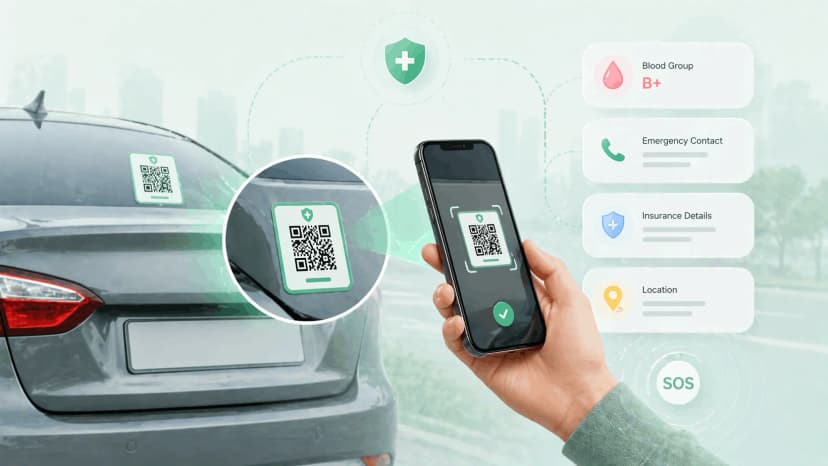
Accident scenarios are higher risk. Bike riders have significantly higher injury risk than car occupants. In an accident, a QR sticker on the bike (or in the helmet) gives bystanders immediate access to emergency contacts and medical information when the rider can't communicate.
Three Ways Indian Bike Owners Use QR Tags
1. Parking contact
This is the most common use. A small QR sticker in a visible spot on the bike -storage box lid, near the number plate area, or on the helmet - lets anyone who needs the owner to move the bike reach them directly.
In a housing society in Pune, your downstairs neighbour's car might be blocked by your Activa every other week. With a QR tag, they scan and call you in 10 seconds rather than sending escalating WhatsApp messages through the building group.
2. Emergency information after an accident
A QR profile on the bike - or better still, inside the helmet - carries your blood type, known allergies, emergency contact, current medications, and insurance details. At an accident scene, the first bystander or paramedic who gets to you has actionable information immediately.
This is especially valuable for solo riders on highways or night rides where no one nearby knows who you are.
3. Ownership and identification
A QR profile linking to your name, contact, and vehicle details provides quick ownership reference. This is useful in disputes (e.g., if your bike was towed and you need to prove ownership to retrieve it), and it gives security guards and building management a quick way to verify which resident a bike belongs to.
Setting Up a Bike QR Profile with ProfileTap
ProfileTap is a smart identity management platform that creates digital profiles for vehicles (and people, pets, and more). Here's the setup for your bike:
Step 1: Create your ProfileTap account. Takes about two minutes to sign up.
Step 2: Create a vehicle profile for your bike. Select "Vehicle" as the profile type. Add your bike's make, model, colour, and registration number.
Step 3: Add parking contact information. This is the primary use case for most riders. Add your phone number (protected by call masking) and a short message: "Parked nearby - call to ask me to move, happy to come immediately."
Step 4: Add emergency information. Add your blood group, drug allergies, any medical conditions, and at least one emergency contact with their relationship to you and phone number. This takes 5 minutes but matters enormously if something goes wrong.
Step 5: Enable call masking. This is essential for a QR sticker that will be visible on your bike in public spaces. Call masking lets anyone who scans and calls reach you without your personal number being stored in their device permanently. You stay reachable; your privacy is protected.
Step 6: Download your QR code. From "Share Profile," download your QR code image.
Step 7: Print and attach. Options for placement are below.
Where to Attach a QR Sticker on a Bike
Placement for bikes requires more thought than for cars, because bikes have limited flat surfaces, face weather exposure, and get handled more by strangers (security guards, parking attendants).
Storage box lid (recommended for scooters) The flat lid of a storage box (like on a Honda Activa, TVS Jupiter, or similar) is ideal - it's flat, visible, protected from rain when closed, and easy to find. This works for scooters with under-seat storage.
Under the seat area / near number plate The area near the rear number plate is a natural location for any identification tag. A small weatherproof sticker here is visible when someone is checking the bike for ownership information.
Helmet - inside (for emergency info) Print a small card with your QR code and slip it inside your helmet using the existing card slot (most modern helmets have one), or attach it with strong velcro. At an accident scene, anyone who handles your helmet will find it immediately. This is the most critical placement for emergency information.
Handlebar tag A small rigid tag attached to the handlebar with a cable tie or loop - similar to a luggage tag - works well for parking contact purposes. It's immediately visible to anyone standing next to the bike.
Use weatherproof materials. Whatever placement you choose, use laminated printed cards or weatherproof sticker paper. Bikes are exposed to rain, sun, and dust in ways that cars aren't. A standard printed sticker will deteriorate quickly without protection.
Call Masking for Bike QR Tags
If your bike is parked in a housing society, office complex, or public space, your QR sticker could be scanned by:
- A neighbour whose car you've blocked
- A security guard checking which resident the bike belongs to
- A parking attendant at a market
- A stranger at an accident scene
These are all appropriate reasons to contact you - but not all of them need your personal mobile number stored in their phone permanently.
ProfileTap's call masking feature routes calls through a masked connection. The person scanning can reach you; your actual number is not displayed to them and is not saved in their call history as your personal mobile number. You answer, sort out the situation, and your privacy is maintained.
This is especially relevant for female riders who may prefer not to have strangers permanently saving their number from a QR sticker scan.
Set Up Your Bike's QR Tag in Under 15 Minutes
Every two-wheeler in India could benefit from a QR tag - for parking contact, emergency info, or both. ProfileTap's vehicle QR code sticker gets your bike's profile set up in under 15 minutes, with call masking so you stay reachable without sharing your number. Pair it with a vehicle profile for a complete digital identity for your bike.
Setting up a bike qr code tag india delivers in two situations every rider knows: blocked parking and roadside emergencies. That's why a bike qr code tag india is worth the 15 minutes.
Related reading: Parking Contact QR Code Guide · Vehicle Emergency QR Sticker Guide