
Quick answer: Lost pet prevention means layering ID so any finder can reach you fast — a microchip, a collar ID tag, and a scannable QR tag that opens your pet's profile and contact number in one tap. In India, where Diwali fireworks and open gates cause most escapes, a qr tag for lost pet recovery is the single highest-impact upgrade.
Every day in India, pet owners post "lost dog" messages in WhatsApp groups, Facebook community pages, and RWA notice boards. The posts are always the same: a frantic photo, a description, a plea. Most of those reunions happen because of a stranger's kindness - someone who spotted the animal and made an effort to help. But the right ID - including a lost and found QR tag - makes that stranger's job immeasurably easier. It turns goodwill into action in under a minute.
This guide covers why pets go missing, what to do the moment yours does, and - more importantly - the prevention steps that make reunion far more likely.
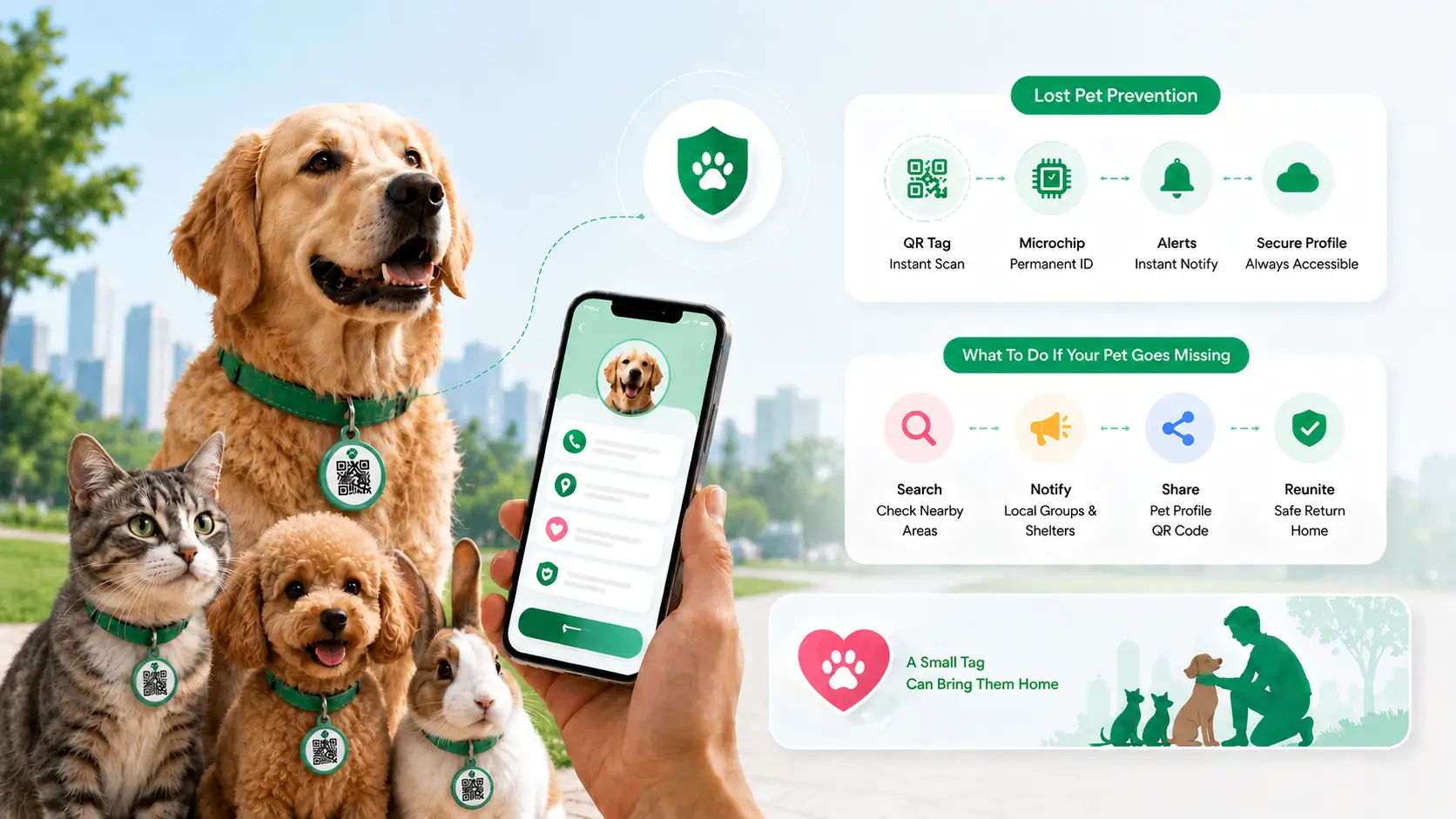
Real lost pet prevention is about layers: knowing how to prevent losing a pet day to day, and having a qr tag for lost pet recovery ready so any stranger can help you find lost pet fast.
Why Pets Go Missing: The Common Causes
Understanding how pets escape is the first step in preventing it. The causes are often predictable - and many are very specific to life in India.
Open gates and doors. The most common cause. A delivery person, a house help, a neighbour's child - someone leaves a gate open for 30 seconds. That's all it takes for a curious dog to wander out.
Festivals and firecrackers. This cannot be overstated for Indian pet owners: Diwali is the single biggest night of the year for pet escapes. The noise from fireworks triggers panic responses in dogs (and many cats) that override their normal behaviour. A dog that's never tried to escape before will bolt under the fence on Diwali night. Holi, New Year's Eve, and even cricket celebrations can trigger the same response. During these periods, extra precautions are essential.
Moving house. Pets are deeply territorial. When you move to a new home - especially across a new city - they haven't yet established their sense of "home." A dog that was perfectly content to stay in your old colony may wander from a new apartment complex.
Off-leash parks and open grounds. Off-leash time is wonderful for dogs, but parks with multiple entry points, or open maidan-style grounds, are easy to get disoriented in. A dog chasing a bird or another dog can cover surprising distances before realising they're lost.
Stress and anxiety. Thunderstorms, construction noise, and new family members (including babies or new pets) can push an anxious animal to seek escape routes they'd otherwise ignore.
Immediate Steps If Your Pet Goes Missing
If your pet has already gone missing, time matters. Here's a structured checklist for the first 24 hours:
In the first hour:
- Walk your immediate neighbourhood, calling your pet's name. Most pets don't go far in the first hour.
- Ask neighbours, security guards, and anyone outside if they've seen your pet.
- Post in your housing society WhatsApp group immediately - this is often the fastest way to get local eyes searching.
Within the first 3 hours:
- Post in local Facebook groups (search "Lost and Found Pets [your city]" - these groups are active in Mumbai, Delhi, Bangalore, Hyderabad, Pune, and most large cities).
- Contact nearby veterinary clinics - people often bring found animals to vets first.
- File a report with local animal shelter or NGO (in Mumbai: In Defence of Animals, Welfare of Stray Dogs; in Delhi: People for Animals; in Bangalore: CUPA - Compassion Unlimited Plus Action).
Within 24 hours:
- Put up physical notices near your building, the park where you walk your pet, and nearby market areas. Include a photo and your number.
- Contact your RWA management office - they can circulate a notice to all residents.
- Post on Next-door or community apps if your area uses them.
Ongoing:
- Keep checking all groups daily. Pets are sometimes found days or weeks later.
- Revisit shelters in person - descriptions over the phone often don't match what staff remember.
Prevention Checklist: Ranked by Importance
These measures, in roughly descending order of impact:
1. Microchipping (highest importance) A microchip is a permanent identifier implanted under the skin. It doesn't require a collar or a battery. Any vet or shelter with a scanner can read it. Microchipping is inexpensive (₹500–₹1,500 at most vets), and it provides a permanent link between your pet and your registered contact details. The limitation: microchip details need to be kept updated in the registry, and not every person who finds a pet will take it to a vet to be scanned.
2. Collar with ID tag (always on) A collar with your contact information should be on your pet whenever they leave the house - and ideally at all times. Even indoor cats should wear a collar; escapes happen when doors and windows are left open.
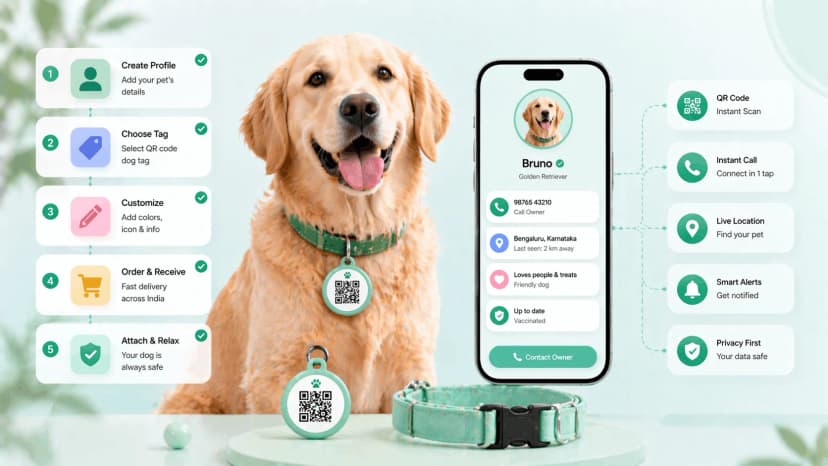
3. QR smart tag (dramatically improves reunion speed) A QR smart tag attached to the collar gives any finder - not just a vet, not just a shelter -immediate access to your full contact information. No scanning device required beyond a smartphone. No intermediary needed. This is the tool that turns a stranger's goodwill into a direct call to you within seconds.
4. Updated contact information everywhere This sounds obvious but is frequently overlooked. If your phone number has changed since you microchipped your pet, update the registry. If your QR profile has an old number, update it. Information that's months or years out of date can break the entire chain of reunion.
5. Secure enclosures Walk your property and check for gaps in fences, gates that don't latch properly, and spots where a determined dog could dig under or squeeze through. Fix them before they become an escape route.
6. Training A dog that reliably comes when called has a far better chance of being recovered before getting truly lost. Recall training is one of the most valuable investments you can make in your pet's safety.
How QR Tags Dramatically Improve Reunion Rates
Here's what typically happens when someone finds a lost pet without a QR tag:
The finder doesn't know what to do. They're not sure if the dog is stray or owned. They might take it to a vet, post on a local Facebook group with a photo, or simply leave it - having no way to contact the owner. The clock ticks.
Here's what happens when the pet has a QR tag:
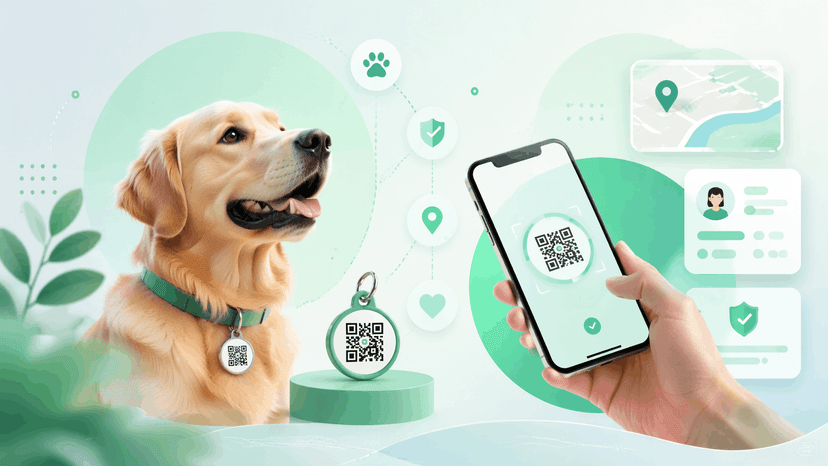
The finder scans the code. Your pet's profile opens. They see your pet's name, a photo confirming it's your animal, your contact number, and a one-tap call button. They call. You pick up. You know exactly who has your pet and where they are. The reunion happens today, not in three days.
The QR tag doesn't just speed things up - it converts passive bystanders into active helpers. A stranger who found a dog but didn't know what to do becomes a person who can call you immediately. That's the real value.
A dedicated lost and found QR tag through ProfileTap is specifically designed for this scenario - it presents your pet's information in the clearest possible format for a finder, with contact options front and centre.
Setting Up a QR Lost-and-Found Profile with ProfileTap
ProfileTap is a smart identity management platform. For pet owners, it lets you create a digital pet profile that's always current, always accessible, and built to convert a scan into a reunion.
Here's how to set it up:
Step 1: Create your ProfileTap account. Takes about two minutes.
Step 2: Create your pet's profile. Select "Pet" as the profile type. Add your pet's name, breed, age, colour, weight, and any distinctive markings (a white patch on the left ear, three legs - anything that helps a finder confirm identification).
Step 3: Add a clear, recent photo. This is critical. A finder who isn't sure if the dog they found is yours needs a photo to confirm. Use a photo taken in good light that clearly shows your pet's face and markings.
Step 4: Add multiple contact methods. Your primary phone number, a backup contact, and a WhatsApp number. In India, WhatsApp is often the fastest first contact. You decide which contact options appear on the public profile, so you stay in control of what a finder sees.
Step 5: Add vet and medical information. This helps if the finder takes your pet to a vet before reaching you.
Step 6: Get your QR code and attach it to the collar. Download the QR code, print it on weatherproof sticker paper or order a custom tag, and attach it securely to your pet's collar.
Step 7: Test it. Scan the code yourself to confirm everything looks right and all contact links work.
Give Your Pet the Best Chance of Coming Home
No pet owner wants to need a lost pet protocol - but having one ready is an act of love. ProfileTap's lost and found QR tag gives any stranger who finds your pet everything they need to reach you within seconds. Pair it with a pet ID profile to give your pet the most complete digital identity possible. Set it up once, update it whenever things change, and keep it on every time your pet leaves home.
Key Takeaways
Lost pet prevention in India comes down to layering your defences:
- A microchip as permanent backup, a collar and ID tag as visible first contact, and a QR smart tag that gives any finder immediate, one-tap access to your contact details.
- The QR tag is the highest-impact upgrade — it turns any smartphone-carrying stranger into someone who can call you directly, right now.
- Keep your contact details updated across every profile, and your pet has the best possible chance of coming home quickly.
Related reading: Best Pet ID Solutions in India · How Pet QR Tags Work
.webp&w=828&q=75 "Best Pet ID Solutions in India: Tags, QR Codes, and Smart Options (2026)")