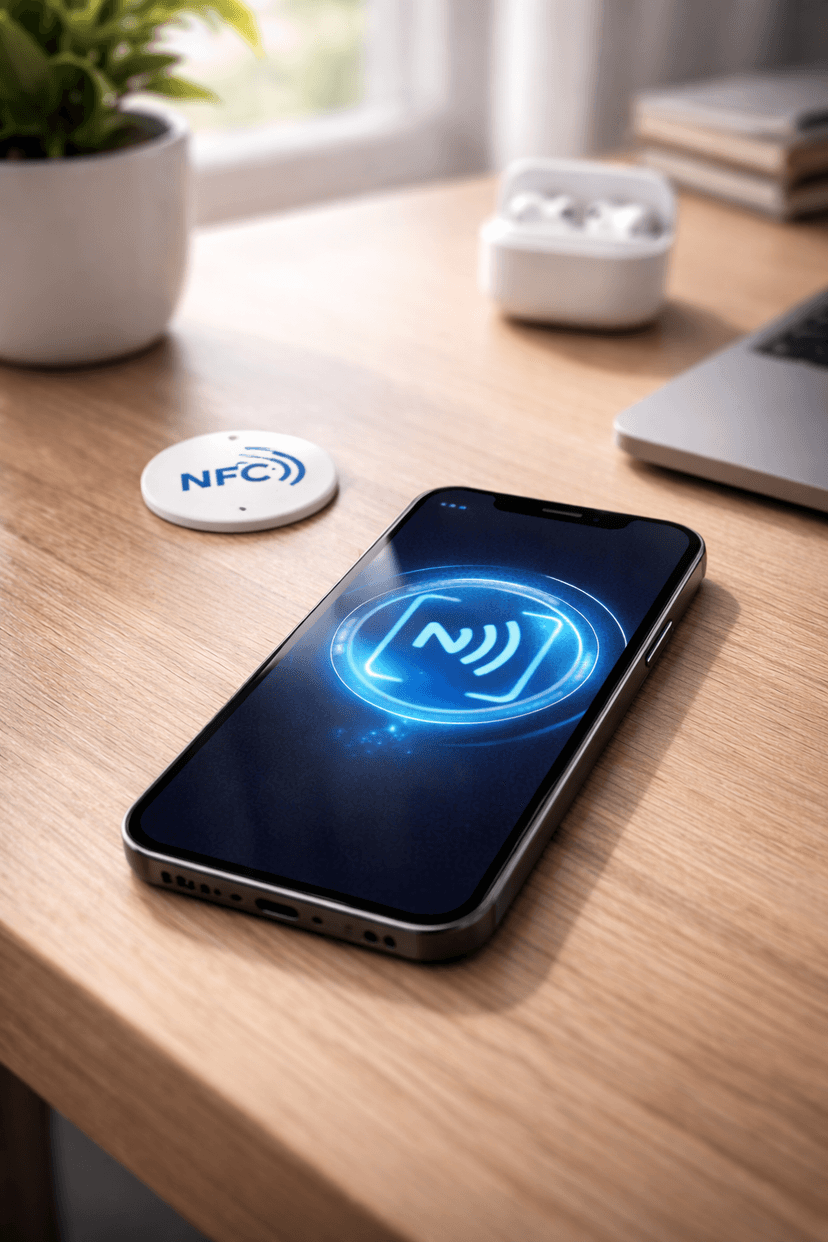

Near Field Communication (NFC) is a communication technology that enables data exchange between two NFC-enabled devices placed very close to each other, usually within 4 centimeters. NFC tags use this technology to perform predefined actions when scanned by smartphones or other compatible devices.
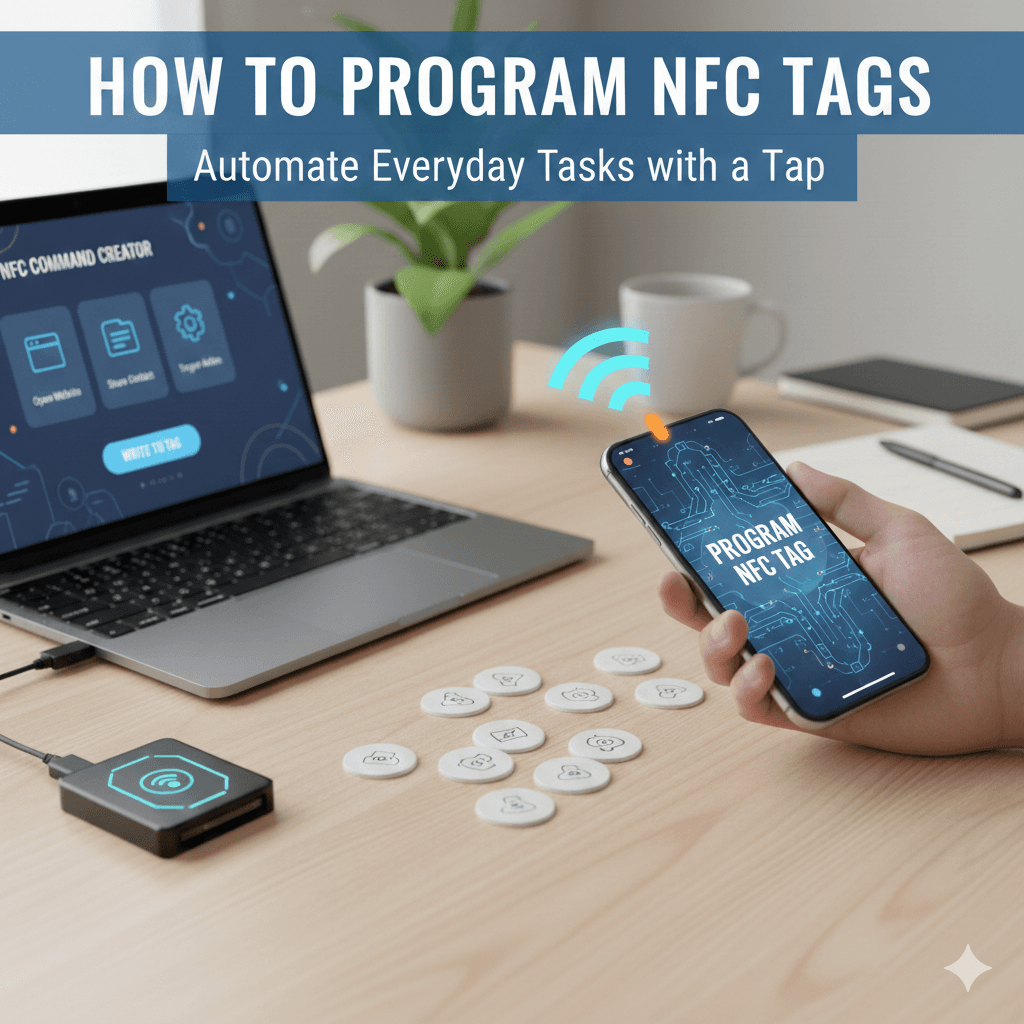
Programming NFC tags allows you to automate many manual tasks such as opening websites, sharing contact details, or triggering phone actions. With the right tools, setting up NFC tags is simple and takes only a few minutes.
How Does Programming NFC Tags Work?
Programming an NFC tag involves writing a specific task or instruction onto the tag. Once programmed, any NFC-enabled device that comes close to the tag will automatically perform the stored action.
The information is stored directly on the NFC tag, allowing it to function without an internet connection or power source. This makes NFC tags efficient, reliable, and easy to reuse for automation.
What Do You Need to Program NFC Tags?
Before programming an NFC tag, you need a few basic requirements to ensure the process works smoothly.
- An NFC-compatible smartphone (Android or iPhone 7 and newer)
- Blank and writable NFC tags
- An NFC tag writing application
- A clear idea of the task you want to automate
Install an NFC Tag Writing App
Several free applications are available on the Google Play Store for programming NFC tags. Popular options include NFC Tools, Trigger, and NXP TagWriter.
For beginners, NFC TagWriter by NXP is highly recommended due to its simple interface and wide range of supported actions such as links, business cards, Wi-Fi settings, and app launches.
How to Write Data to an NFC Tag
Once the app is installed, launch it and choose the option to write a new task. Select the type of action you want to perform, such as opening a website or sharing information.
- Open the NFC writing app on your phone
- Select the option to create a new dataset or task
- Choose the action type, such as URL or text
- Enter the required data (for example, a website link)
- Tap the NFC tag to your phone to write the data
Customize NFC Tag Settings
After defining the task, most NFC writing apps allow you to customize additional settings such as tag protection, overwrite confirmation, or interaction counters.
You can choose to protect the tag from being rewritten, require confirmation before overwriting data, or enable tracking features depending on your use case.
Using Your Programmed NFC Tag
Once the tag is successfully written, testing it is simple. Exit the app and tap the NFC tag to the back of your smartphone.
If programmed correctly, the assigned action—such as opening a website—will execute automatically. NFC tags can then be placed on desks, cards, posters, or products for everyday use.
Final Thoughts
Programming NFC tags is an easy and powerful way to automate tasks and improve efficiency. With minimal setup and no ongoing maintenance, NFC tags offer a practical solution for both personal and professional applications.
As NFC adoption continues to grow, learning how to program NFC tags can help you unlock smarter interactions and simplify everyday digital actions.