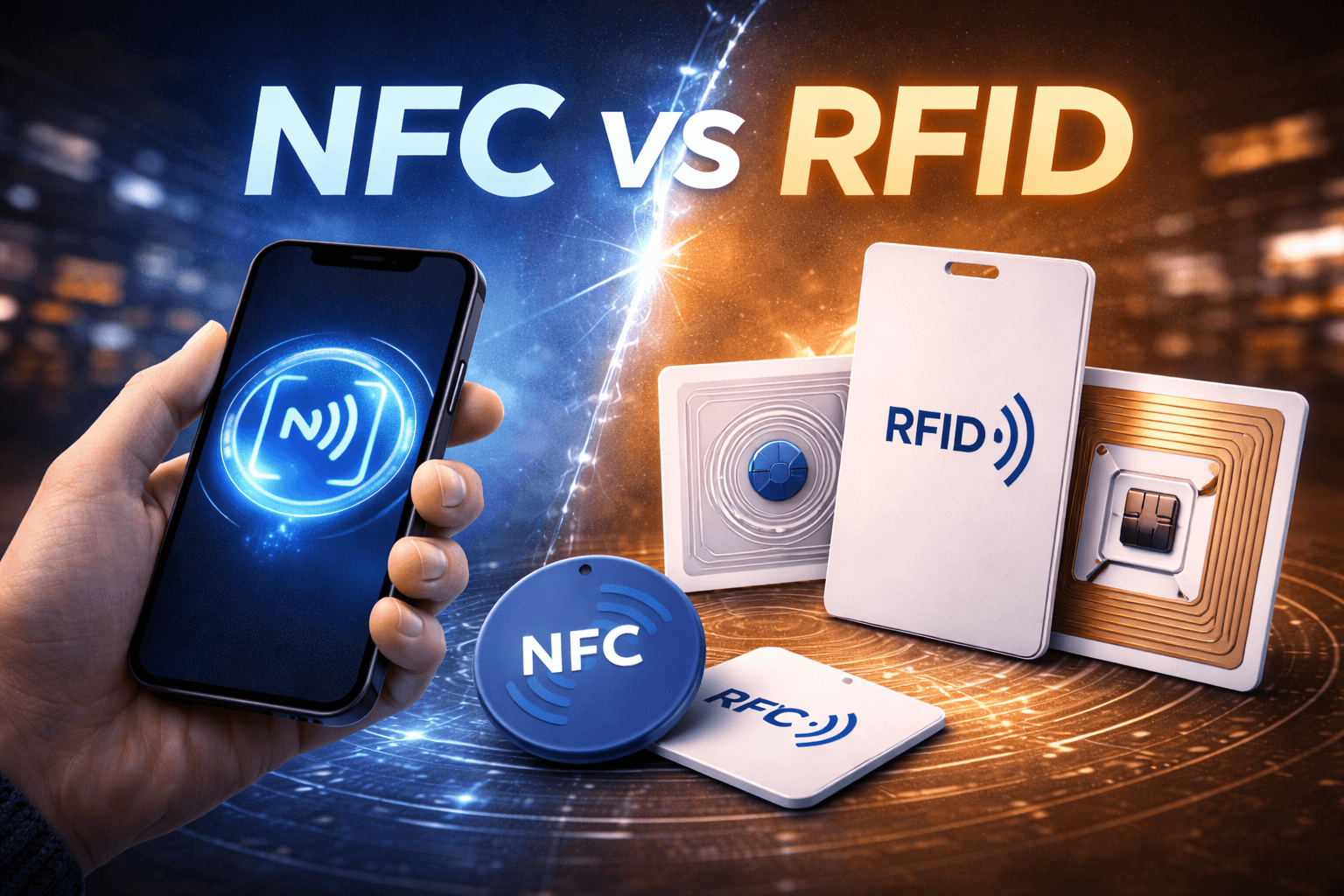

NFC and RFID are closely related wireless technologies used for identifying, tracking, and exchanging data between devices. Although they share similar principles, they differ significantly in range, interaction model, and real-world use cases.
Understanding the differences between NFC and RFID helps businesses and consumers choose the right technology for applications such as payments, access control, asset tracking, and smart devices.
What Is RFID?
RFID stands for Radio Frequency Identification. It is a technology that uses radio waves to automatically identify and track tags attached to objects. RFID systems typically consist of a reader, an antenna, and a tag containing a microchip.
RFID tags can be passive, active, or semi-passive. Passive tags draw power from the reader’s signal, while active tags use an internal battery to transmit data over longer distances.
What Is NFC?
NFC, or Near Field Communication, is a subset of RFID technology designed for short-range communication. NFC operates at a frequency of 13.56 MHz and typically works within a range of a few centimeters.
Unlike traditional RFID, NFC supports two-way communication. This allows devices such as smartphones to both read and write data, making NFC ideal for interactive applications.
Key Differences Between NFC and RFID
While NFC is based on RFID standards, the two technologies differ in several important ways that affect how they are used in practice.
- Range: RFID can operate from a few centimeters to several meters, while NFC is limited to very short distances
- Communication: RFID is typically one-way, whereas NFC supports two-way communication
- Security: NFC offers stronger security due to proximity requirements and system-level controls
- User interaction: NFC is designed for intentional user actions such as tapping a phone
Common Use Cases
RFID is widely used in logistics, supply chain management, inventory tracking, and access systems where scanning multiple items quickly is important.
NFC is commonly found in contactless payments, digital business cards, smart wearables, and mobile automation. Its short range makes it well suited for secure, user-initiated interactions.
Security Considerations
Because RFID systems can operate over longer distances, they are more susceptible to unauthorized scanning if not properly secured. Encryption and access controls are essential in such environments.
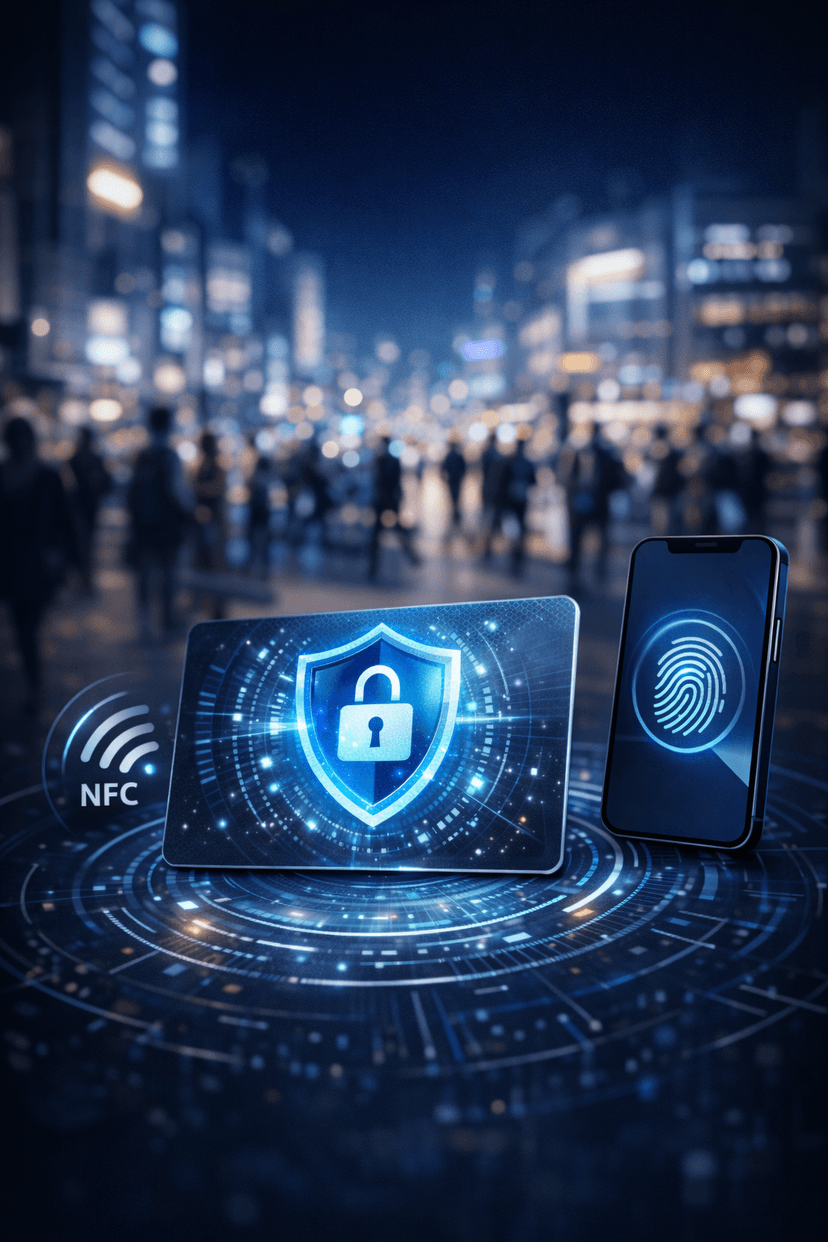
NFC reduces many of these risks by requiring close physical proximity. Modern smartphones further enhance NFC security through operating system permissions, encryption, and biometric authentication.
Which Technology Should You Choose?
The choice between NFC and RFID depends on the specific requirements of the application. If long-range, bulk scanning is needed, RFID is the better option.
If secure, short-range, and user-driven interactions are the priority, NFC provides a more controlled and intuitive experience.
Conclusion
NFC and RFID are powerful technologies that serve different purposes despite their shared origins. Understanding their strengths and limitations helps in selecting the right solution for both consumer and enterprise applications.